
How to Tell If a 925 Sterling Silver Bracelet Is Real: A Practical Guide
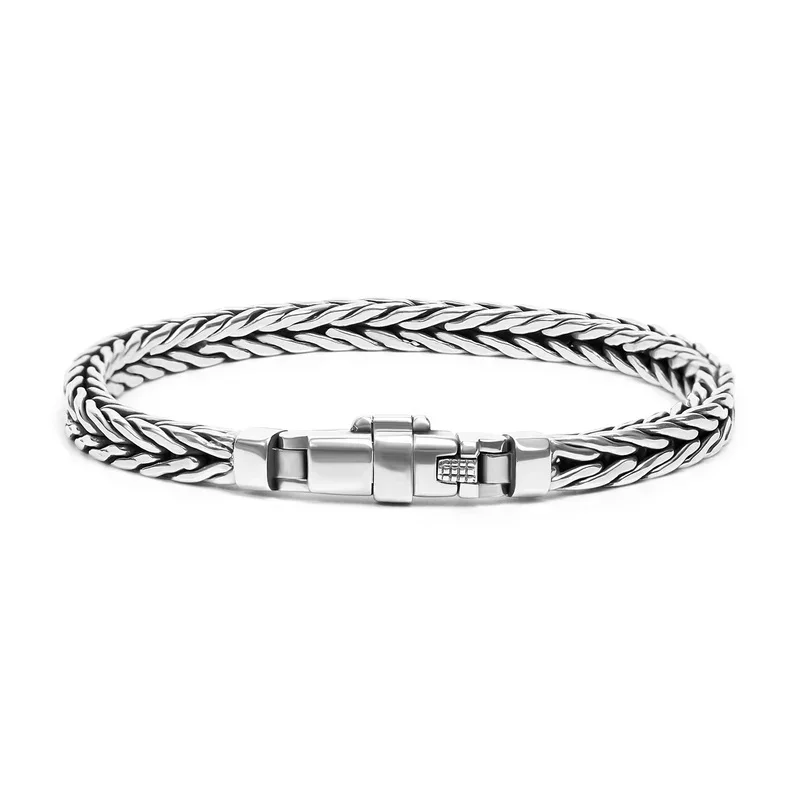
When you’re buying a sterling silver bracelet, the hardest part isn’t usually finding one that looks good. The harder question is whether the material is actually what the seller says it is.
A bracelet marked “925” may look exactly like another bracelet described as silver plated or simply “silver tone,” even though the materials are quite different. Photos aren’t enough to tell the difference, and some of the home tests commonly recommended online can be misleading.
The good news is that you don’t need complicated equipment to make a better-informed purchase. Start by understanding what 925 sterling silver actually means, then look at several clues together rather than relying on a single test.
O que significa prata de lei 925?
The number 925 refers to the silver content of the alloy. Sterling silver contains 92.5% silver, while the remaining 7.5% consists of other metals, commonly copper or other alloys used to improve strength and durability.
This is important because pure silver is relatively soft. It is more easily scratched or bent, which makes it less practical for many types of jewelry that are worn and handled regularly. Sterling silver retains a high silver content while being considerably more practical for bracelets, rings and other everyday pieces.
You may also see markings such as S925 ou 925 Sterling. The exact marking can vary depending on the manufacturer and the design of the jewelry.
One thing worth remembering is that 925 does not mean 100% pure silver. Fine silver is generally 99.9% silver, while sterling silver is 92.5%. Neither is automatically “better” for every type of jewelry; the appropriate material depends on how the piece is intended to be used.
If you want to understand more about silver purity and the different types of silver used in jewelry, our guide to selecting pure silver jewelry provides more background.
1. Start With the 925 Mark, But Don’t Stop There
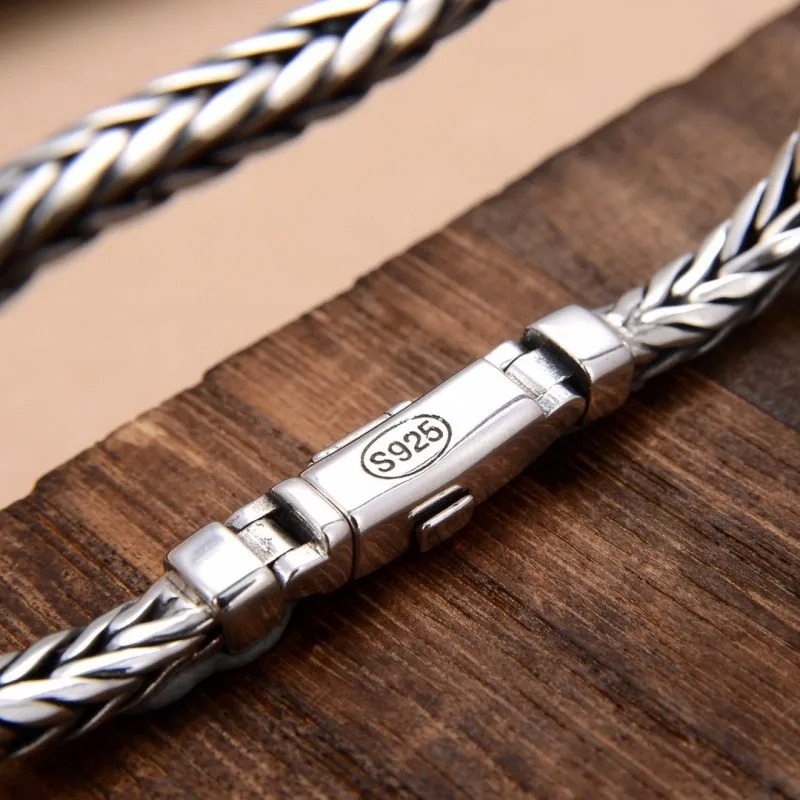
The first thing I would check on a bracelet is whether there is a 925 or S925 mark.
Depending on the design, you might find it near the clasp, on a small tag, on the inside of a bangle, or somewhere else that doesn’t interfere with the appearance of the piece.
A genuine sterling silver bracelet will normally be appropriately marked where practical, but the mark should be treated as evidence rather than absolute proof.
The reason is simple: a stamp can be copied. Someone can put “925” on a piece of jewelry that contains little or no sterling silver.
At the same time, not seeing a stamp doesn’t automatically prove that a bracelet isn’t silver. Very small components or unusual designs may not provide a practical place for a hallmark, and markings can sometimes become difficult to see through wear.
For that reason, the better question isn’t simply “Does it say 925?” It is “Does the 925 marking make sense when I look at the rest of the product information and the seller?”
2. Make Sure You Know the Difference Between Sterling Silver and Silver Plated
This is one of the easiest ways for a buyer to misunderstand a silver-colored piece of jewelry.
Sterling silver and silver plated are different materials.
A sterling silver bracelet is made from a sterling silver alloy, while silver-plated jewelry has a relatively thin layer of silver applied over another base material. When new, both can have a bright, attractive silver appearance, so a photograph alone may not tell you much.
The distinction becomes more important as the jewelry is worn. With plated jewelry, repeated friction can eventually wear through the silver layer, particularly around edges, clasps and other high-contact areas. The underlying material may then become visible.
When shopping online, pay attention to the exact wording in the material description. “Sterling silver,” “925 silver,” “silver plated,” and “silver tone” should not be treated as interchangeable terms.
A seller who clearly states the material is giving you much more useful information than a listing that simply describes a bracelet as “silver.”
3. Check the Product Details Before Looking for Home Tests
A surprising amount of useful information can be found before you perform any test at all.
Look for the material description, bracelet dimensions, weight when provided, construction details and the seller’s return policy. A reputable seller should be able to explain what the bracelet is made from without relying on vague phrases.
It’s also worth checking whether the photos show the actual product or are generic promotional images. Customer reviews can be useful too, particularly when they include photographs taken after the jewelry has been worn for some time.
None of these things proves the silver content by itself, but together they give you a much better picture of what you’re buying.
For a more expensive bracelet, I would pay particular attention to whether the seller is transparent about the material and willing to answer questions about it. If a seller avoids a straightforward question such as “Is this bracelet solid 925 sterling silver or silver plated?”, that’s a reason to look elsewhere.
4. The Magnet Test Can Be Useful, But It Cannot Prove Silver Is Real
The magnet test is probably one of the most commonly suggested ways to check silver at home.
Sterling silver is not strongly magnetic, so a strong attraction to a magnet can be a warning sign that the bracelet contains a ferromagnetic metal.
The important part is what the test cannot tell you.
A bracelet that doesn’t react to a magnet is not automatically genuine sterling silver. Many other metals are also non-magnetic, so a lack of attraction doesn’t confirm the material.
In other words, the magnet test can sometimes help you rule something out, but it cannot positively identify a bracelet as 925 sterling silver.
It’s fine as a quick preliminary check. It just shouldn’t be treated as a final answer.
5. Don’t Assume Tarnishing Proves That Silver Is Genuine
Sterling silver can tarnish. Over time, exposure to air, moisture, sweat, cosmetics and certain chemicals can cause the surface to become darker or lose some of its original shine.
That is normal behavior for silver, and it doesn’t necessarily mean there is anything wrong with the bracelet.
But there is an important distinction here: tarnishing is not a reliable authenticity test.
A non-silver metal can also discolor or oxidize, while a genuine sterling silver bracelet may remain relatively bright depending on how it is worn, stored and finished.
So if a bracelet turns dark, that doesn’t prove that it is real silver. Likewise, if it stays bright, that doesn’t prove that it is fake.
Tarnish tells you something about the surface and the environment the jewelry has been exposed to. It doesn’t tell you the exact metal composition.
6. Look Closely at the Craftsmanship
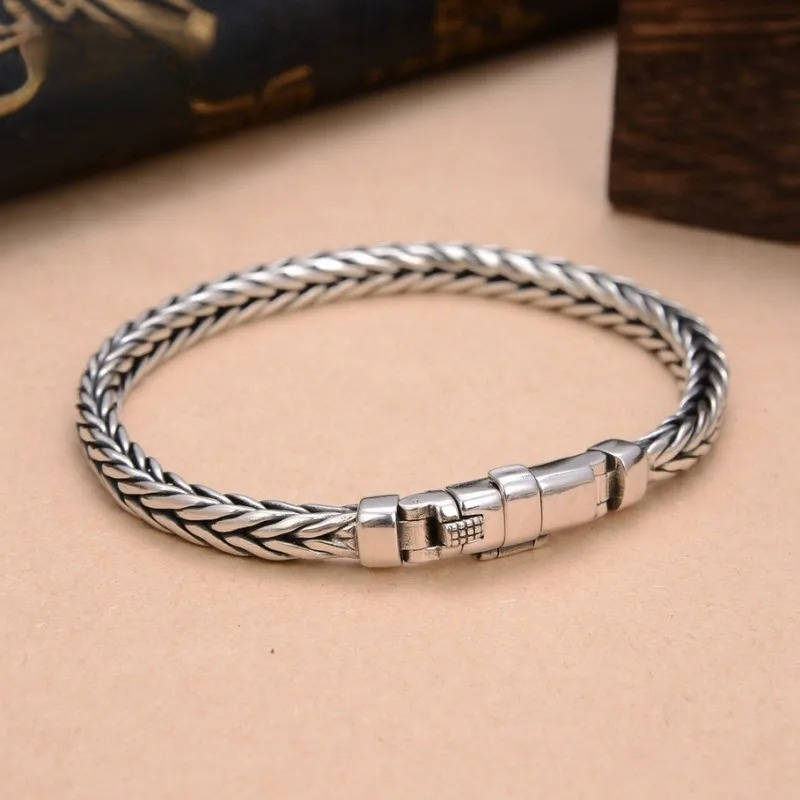
The construction of a bracelet can reveal a lot about its manufacturing quality, even though it cannot confirm silver purity on its own.
Pay attention to the clasp, connections between links, soldered areas, edges and engraved details. A well-made bracelet should generally have clean joins, properly aligned components and a clasp that works smoothly.
For a chain bracelet, look at whether the links move naturally and whether there are obvious gaps or rough edges. For a bangle, check whether the inside and outside surfaces are finished properly and whether there are sharp areas that could catch on clothing or irritate the skin.
These details matter because jewelry is something you interact with every day. A bracelet can technically be made from genuine sterling silver and still be poorly manufactured.
It’s therefore useful to separate two questions:
Is the metal genuine?
e
Is the bracelet well made?
A good answer to one doesn’t automatically answer the other.
7. Be Careful With Extremely Low Prices
Price can be a useful warning sign, but it isn’t a silver test.
The cost of a sterling silver bracelet depends on more than the raw silver. Weight, design complexity, handwork, finishing, gemstones, packaging, shipping and the seller’s business model can all affect the final price.
That means a cheap bracelet isn’t automatically fake. A lightweight design made and sold directly to consumers can legitimately cost much less than a heavy, elaborate piece sold through several layers of distribution.
What should make you cautious is a combination of an unusually low price and unclear material information.
If a listing claims to be solid 925 sterling silver but provides almost no information about the material, dimensions or seller, don’t let the low price convince you that you’ve found an incredible bargain. Take a closer look before buying.
8. Consider the Seller as Part of the Verification Process
When you buy jewelry online, you’re trusting the seller’s description of the material. That makes the seller an important part of the equation.
Before placing an order, look for a clear business identity, contact information, material specifications, customer reviews and a reasonable return policy. The seller should be able to explain whether the item is sterling silver, silver plated or another material without using confusing language.
It’s also worth checking how the company describes its other products. A business that consistently distinguishes between sterling silver, plated jewelry and other materials is generally giving customers more useful information than one that simply calls everything “silver.”
This doesn’t guarantee that every product is genuine, but transparency is a much better starting point than relying on a single visual or home test.
What About Testing Silver With Sound or Weight?
You may have seen advice suggesting that real silver has a particular sound when tapped or that you can identify it by its weight.
There is some reasoning behind these ideas because different metals have different physical properties. The problem is that jewelry isn’t a standardized piece of solid metal.
A bracelet’s weight depends on its size, thickness, whether parts are hollow or solid, the design, the clasp and any stones or additional components. Sound is affected by the same kinds of variables.
For that reason, I wouldn’t use either method as a serious authenticity test. At best, they can give you another observation to consider, but they can’t tell you whether a bracelet contains 92.5% silver.
What About Acid Testing?
Acid testing is a more traditional way of testing precious metals, but it’s not something I recommend experimenting with on a bracelet at home.
Testing chemicals can damage or mark the surface, and the result needs to be interpreted correctly. If you’re dealing with an inexpensive piece of jewelry, the potential damage simply isn’t worth it.
For a valuable bracelet where the metal composition really matters, professional testing is a much better approach.
When Is Professional Testing Worth It?
For an ordinary bracelet purchased from a reputable seller, most people don’t need laboratory-level testing.
The situation is different when you’re dealing with an expensive piece, an inherited bracelet, a second-hand purchase, or jewelry whose material is genuinely in doubt.
A qualified jeweler or professional testing service can use appropriate equipment to assess the metal composition. Methods such as X-ray fluorescence (XRF) can provide much more useful information than a magnet or visual inspection.
If the value of the jewelry is significant, paying for professional testing can be worthwhile simply because it removes much of the uncertainty.
How to Buy a Genuine 925 Sterling Silver Bracelet
If you’re buying a new bracelet, the simplest approach is to do most of your checking before you place the order.
Start with the material description and make sure the seller clearly states prata de lei 925 rather than simply “silver.” Look for a 925 marking where appropriate, but don’t treat the stamp as the only evidence. Check the product specifications, seller information and return policy, and read reviews from people who have actually purchased the item.
It is also worth checking the design and construction. A bracelet that is well finished, properly described and sold by a transparent seller is a much safer purchase than one that relies on vague claims and an unusually low price.
If you’re looking for everyday styles, you can browse our collection of Pulseiras femininas em prata de lei. For a more traditional cuff or bangle style, see our Pulseiras femininas em prata de lei. Men looking for heavier styles can also explore our Men’s Sterling Silver Braceletes.
How to Care for a 925 Sterling Silver Bracelet
Once you have a genuine sterling silver bracelet, normal care will help keep it looking good.
Silver naturally reacts with its surroundings, so some tarnishing over time is nothing unusual. Keeping the bracelet away from strong chemicals, chlorine and unnecessary exposure to cosmetics can slow the process.
When you aren’t wearing it, store the bracelet somewhere dry and preferably in a soft pouch or jewelry box where it won’t rub against other pieces. If it becomes dull or lightly tarnished, a suitable silver polishing cloth is often enough to restore some of its shine.
For a more detailed cleaning routine, see our guide on how to clean and maintain a sterling silver Cuban link bracelet. Although that article focuses on Cuban link bracelets, the basic principles of gentle cleaning, drying, storage and avoiding harsh chemicals apply to many sterling silver bracelets.
If the bracelet contains gemstones, special finishes, oxidation, plating or other delicate elements, check the care requirements before using any stronger cleaning product.
Perguntas frequentes
Is 925 sterling silver real silver?
Yes. 925 sterling silver is real silver. The 925 designation means that the alloy contains 92.5% silver, with the remaining portion made up of other metals.
Does a 925 stamp guarantee that a bracelet is real?
No. A 925 stamp is an important indication of the claimed material, but the stamp itself can be falsified. It should be considered together with the seller, product information and other evidence.
Does real sterling silver turn black?
Sterling silver can tarnish and become darker over time, but tarnishing doesn’t prove that a piece is genuine. Other metals can also discolor.
Is silver plated the same as 925 sterling silver?
No. Sterling silver is a silver alloy containing 92.5% silver, while silver-plated jewelry has a layer of silver applied over another base material.
Can a magnet tell if silver is real?
Not by itself. Sterling silver is not strongly magnetic, so a strong magnetic reaction may be a warning sign, but a lack of magnetic reaction doesn’t prove that the bracelet is genuine silver.
A prata de lei 925 é adequada para uso diário?
Yes. Sterling silver is commonly used for everyday jewelry because it provides a useful balance between silver content and durability. It can still scratch and tarnish, so some basic care is necessary.
What is the most reliable way to test sterling silver?
For valuable jewelry, professional testing is more reliable than home methods such as magnets, sound or visual inspection. A qualified jeweler or testing service can assess the metal composition using appropriate equipment.
Considerações finais
There are plenty of quick tricks online for identifying real silver, but most of them are better described as clues than definitive tests.
The 925 mark is useful, but it can be copied. A magnet can sometimes reveal a problem, but many non-silver metals are also non-magnetic. Tarnishing is normal for sterling silver, but other metals can tarnish too. Even the weight and craftsmanship of a bracelet can’t tell you its exact silver content.
The most sensible approach is to look at several pieces of information together: the material description, 925 marking, product specifications, construction, seller reputation and return policy. For an expensive bracelet where authenticity really matters, professional testing is the safest way to remove doubt.
And if you’re buying sterling silver for everyday wear, don’t be put off by the fact that genuine silver can develop small scratches or tarnish over time. Those are normal characteristics of the material, not signs that the bracelet is necessarily fake. With reasonable care, a well-made 925 sterling silver bracelet can remain a wearable piece of jewelry for many years.