
Sterling Silver vs Stainless Steel Bracelets: Which Is Better for Men?
Wondering whether to choose a sterling silver or stainless steel bracelet? Compare appearance, durability, comfort, maintenance, value, and craftsmanship to discover which material best suits your lifestyle.
Introduction
Choosing a men’s bracelet involves more than selecting a design you like. One of the most important decisions is choosing the material, because it affects not only how the bracelet looks but also how it feels, ages, and performs over years of wear.
Among all bracelet materials, 925スターリングシルバー そして stainless steel are two of the most popular choices. At first glance, they can look surprisingly similar. Both offer a sleek metallic appearance, both are suitable for everyday wear, and both are available in styles ranging from minimalist chains to bold statement bracelets.
Yet beneath their similar appearance lie significant differences.
The material you choose influences everything from comfort and craftsmanship to maintenance requirements, durability, and long-term value. Understanding these differences can help you invest in a bracelet that matches both your personal style and your lifestyle.
Whether you’re buying your first bracelet or adding another piece to your collection, knowing the strengths of each material will make your decision much easier.
Sterling Silver vs Stainless Steel: Quick Answer
If you’re looking for a quick recommendation before reading the full guide, here’s the short answer.
Choose sterling silver if you value timeless style, genuine precious metal, handcrafted craftsmanship, and a bracelet that can develop character over time. Choose stainless steel if you want maximum scratch resistance, minimal maintenance, modern styling, and an affordable everyday bracelet.
Neither material is universally better.
Instead, the best choice depends on:
- Your budget
- Your personal style
- Your daily activities
- How much maintenance you’re comfortable with
- Whether you value craftsmanship or practicality more
The rest of this guide explains these differences in detail, helping you decide which bracelet is the better investment for your needs.
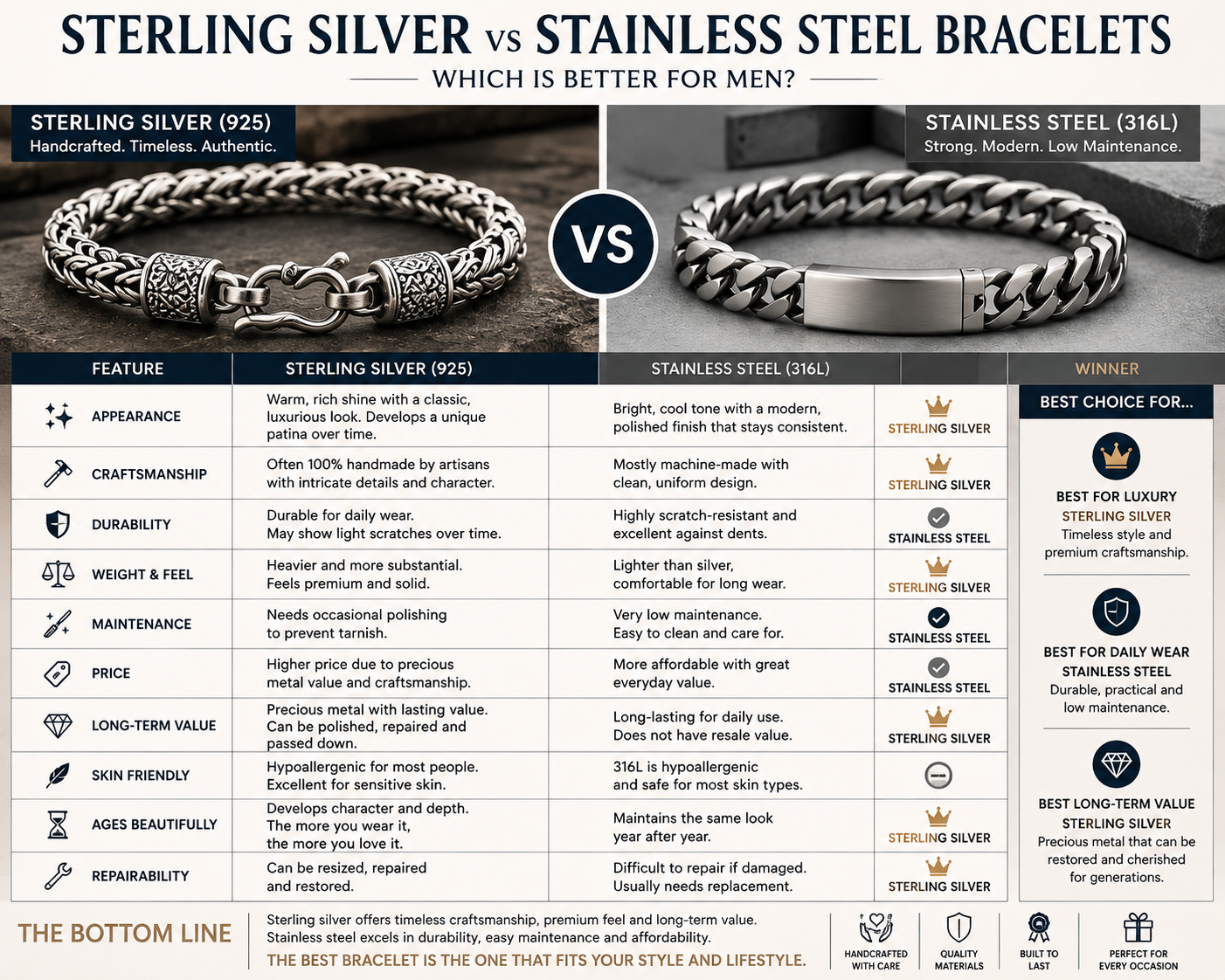
Quick Comparison
If you only have a few minutes, this comparison table summarizes the most important differences.
| Feature | Sterling Silver | Stainless Steel |
|---|---|---|
| 材料 | 92.5% precious silver alloy | Iron-based alloy with chromium |
| Appearance | Warm, elegant shine | Bright, modern metallic finish |
| 重さ | Heavier, premium feel | Slightly lighter |
| Scratch Resistance | Good | Excellent |
| Tarnish | Develops natural patina | Rarely tarnishes |
| Maintenance | Occasional polishing | Very little maintenance |
| Craftsmanship | Frequently handcrafted | Mostly machine-made |
| Restoration | Easily polished and refinished | Limited refinishing |
| Long-Term Value | Precious metal value | Practical everyday value |
| Best For | Timeless jewelry & collectors | Active lifestyles & everyday wear |
Which Material Wins?
If you’re comparing the two materials feature by feature, here’s a quick overview.
| Category | Winner |
|---|---|
| Luxury Appearance | 🥇 Sterling Silver |
| Scratch Resistance | 🥇 Stainless Steel |
| Precious Metal Value | 🥇 Sterling Silver |
| Low Maintenance | 🥇 Stainless Steel |
| Handcrafted Designs | 🥇 Sterling Silver |
| Everyday Practicality | 🥇 Stainless Steel |
| Long-Term Collectability | 🥇 Sterling Silver |
| Budget-Friendly Price | 🥇 Stainless Steel |
As you can see, there isn’t a single overall winner. Instead, each material excels in different areas. This is why the right bracelet depends less on which material is “better” and more on which qualities matter most to you.
Why This Comparison Matters
Many people compare sterling silver and stainless steel simply because they look similar in online photos.
However, after wearing them for a few weeks or months, the differences become much easier to notice.
Sterling silver offers the warmth, craftsmanship, and timeless appeal of a genuine precious metal. It develops a natural patina over time and can often be polished back to its original brilliance, making it a favorite among jewelry enthusiasts and collectors.
Stainless steel is admired for different reasons. Its excellent durability, resistance to corrosion, and minimal maintenance make it a practical choice for people who want a bracelet they can wear every day with very little care.
Neither material is right or wrong. Both have earned their place in men’s jewelry because they satisfy different needs. The purpose of this guide isn’t to prove that one material is superior. Instead, it’s to help you understand the advantages of each so you can confidently choose the bracelet that best fits your lifestyle.
What We’ve Learned From Crafting Sterling Silver Jewelry
Over the years, we’ve noticed that many customers begin by comparing sterling silver with stainless steel because the two materials often appear almost identical in product photos. Once they experience both bracelets in person, however, their priorities tend to change.
Rather than focusing only on appearance, buyers begin paying attention to details such as the bracelet’s weight, the smoothness of the finish, the craftsmanship of each individual link, and how comfortable it feels during everyday wear.
We’ve also found that customers shopping for a meaningful gift or a bracelet they intend to wear for many years are often drawn to sterling silver because of its craftsmanship and lasting value.
Meanwhile, those looking for a practical, worry-free accessory frequently appreciate the simplicity and durability of stainless steel.
These observations reinforce an important point:
Choosing a bracelet isn’t simply about selecting a metal. It’s about choosing the wearing experience that best matches your lifestyle, expectations, and personal taste.
What Is Sterling Silver?
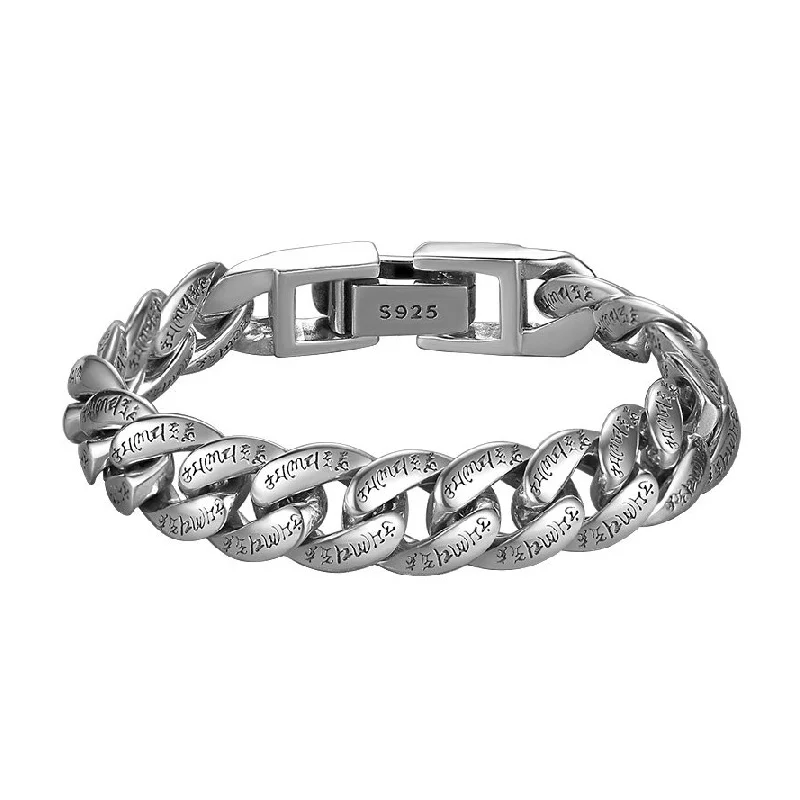
Sterling silver is a precious metal alloy made from 92.5% pure silver and 7.5% strengthening metals, usually copper. This combination creates the ideal balance between beauty and durability, making 925 sterling silver the international standard for high-quality jewelry.
If you’ve ever seen stamps such as:
- 925
- S925
- Sterling
- Sterling Silver
they indicate that the jewelry is made from genuine sterling silver rather than simply having a silver-colored finish.
Unlike silver-plated jewelry, a sterling silver bracelet contains solid sterling silver throughout the piece. This means it can often be polished, restored, and enjoyed for many years with proper care.
Why Isn’t Pure Silver Used?
Many first-time buyers assume that 999 fine silver must be superior because it contains more silver. In reality, that’s not the case for everyday jewelry. >Pure silver is extremely soft and can bend or scratch more easily during regular wear.
For bracelets, which are constantly exposed to movement and accidental contact with hard surfaces, strength is just as important as purity. By adding a small amount of alloy metal, sterling silver becomes significantly more durable while maintaining the appearance and value of genuine silver. That’s why 925 sterling silver has remained the preferred choice for fine jewelry for centuries.
What Makes Sterling Silver Special?
Sterling silver offers a combination of qualities that few jewelry materials can match. It is:
- A genuine precious metal
- Suitable for handcrafted jewelry
- Easy to polish and restore
- Timeless rather than trend-driven
- Comfortable for everyday wear
- Capable of developing a beautiful natural patina
These characteristics make sterling silver popular with everyone from first-time buyers to experienced jewelry collectors. Unlike fashion jewelry that may be replaced after a season, a well-crafted sterling silver bracelet is often purchased with long-term enjoyment in mind.
What Is Stainless Steel?
Stainless steel is an iron-based alloy that contains chromium and other elements to improve strength and corrosion resistance. It was originally developed for industrial applications but has become increasingly popular in watches, accessories, and modern jewelry.
Most stainless steel bracelets are made from 304 または 316L stainless steel, with 316L being especially common in higher-quality jewelry because of its excellent resistance to corrosion and suitability for everyday wear.
Unlike sterling silver, stainless steel is not considered a precious metal.
Its popularity comes from practicality rather than intrinsic material value.
Why Is Stainless Steel So Popular?
Over the past decade, stainless steel has become one of the most widely used materials in men’s accessories. Its popularity is easy to understand.
Stainless steel offers:
- Excellent scratch resistance
- Strong corrosion resistance
- Very little maintenance
- Affordable pricing
- Consistent appearance over time
For many people, these practical advantages outweigh the benefits of precious metals.
It is especially appealing to buyers who want a bracelet they can wear daily without worrying about frequent polishing or regular maintenance.
Sterling Silver vs Stainless Steel: Material Comparison
Although both materials are commonly used for men’s bracelets, they were developed for very different purposes.
| Feature | Sterling Silver | Stainless Steel |
|---|---|---|
| Material Type | Precious metal alloy | Industrial alloy |
| Silver Content | 92.5% silver | None |
| Intrinsic Material Value | はい | No |
| Common Jewelry Grade | 925スターリングシルバー | 316L Stainless Steel |
| Traditional Jewelry Use | Fine jewelry | Modern accessories |
| Handcrafted Production | Very common | Less common |
This difference in material explains why the two bracelets often appeal to different types of buyers. >One emphasizes craftsmanship and precious metal value. The other focuses on durability and practicality.
Appearance Comparison
One of the biggest reasons people compare sterling silver and stainless steel is because they appear similar in photographs.
Once you see both materials side by side, however, the differences become much more noticeable.
Color Tone
Sterling silver has a naturally warm white tone. Its surface reflects light with a softer, richer appearance that many people associate with fine jewelry. Stainless steel typically has a cooler gray-white color with a brighter, more industrial-looking finish. Neither appearance is objectively better.
The choice simply depends on the style you prefer. If you appreciate classic elegance, sterling silver is often the more attractive option. If you prefer a clean, modern aesthetic, stainless steel may better suit your taste.
Surface Texture
Another noticeable difference is texture.
Handcrafted sterling silver bracelets frequently include:
- Hand engraving
- Oxidized finishes
- Hammered textures
- Braided details
- Vintage-style patterns
These traditional techniques create depth and individuality. Stainless steel bracelets, by contrast, usually feature clean, highly uniform surfaces produced through precision machining.
This gives them a modern appearance but generally offers less variation and handcrafted character.
How They Age
One of the most interesting differences only becomes visible after months or years of wear. Sterling silver gradually develops a natural patina through exposure to air.
Rather than being a defect, this subtle aging is appreciated by many jewelry enthusiasts because it enhances engraved details and gives each bracelet a unique personality.
If preferred, sterling silver can usually be polished to restore much of its original shine.
Stainless steel behaves differently. It changes very little over time and generally maintains the same appearance with minimal care. For some buyers this consistency is a major advantage. For others, it lacks the evolving character that makes precious metals feel unique.
Is Sterling Silver More Luxurious?
In terms of traditional fine jewelry, sterling silver is generally regarded as the more luxurious material.
This isn’t simply because it costs more. It’s because sterling silver combines:
- Genuine precious metal content
- Traditional jewelry craftsmanship
- Artisan finishing techniques
- Long history in fine jewelry
- Collectible appeal
Luxury is about more than appearance alone.It also reflects craftsmanship, material quality, and the emotional value of owning something designed to last.
Stainless steel offers a different type of appeal. It emphasizes practicality, consistency, and everyday convenience rather than heritage craftsmanship. Neither approach is wrong—they simply reflect different priorities.
What We’ve Learned About Material Choice
One interesting pattern we’ve noticed over the years is that customers often begin their search by comparing specifications.
They ask questions such as:
- Which material is stronger?
- Which scratches less?
- Which costs less?
However, after wearing their bracelet for a while, many discover that the experience of owning the bracelet matters just as much as the specifications. Some appreciate how sterling silver develops subtle character over time and how its handcrafted details become more noticeable with regular wear. Others enjoy the simplicity of stainless steel because it requires almost no maintenance and always looks consistent.
This reminds us that choosing a bracelet is about much more than comparing materials on paper.
It’s about choosing the one that best matches the way you live and the way you want your jewelry to feel every day.
Durability: Which Material Performs Better Over Time?
If your priority is durability, both sterling silver and stainless steel are excellent choices—but they excel in different ways. Stainless steel is harder and more resistant to scratches, while sterling silver offers the advantage of being repairable, polishable, and capable of lasting for generations with proper care.
Instead of asking which material is stronger, it’s more helpful to ask: Which type of durability matters most to you?
Scratch Resistance
Stainless steel has a clear advantage when it comes to resisting everyday scratches.
Its higher hardness makes it less likely to show marks caused by:
- Keys
- Desks
- Door handles
- Everyday contact with hard surfaces
This makes stainless steel particularly attractive for people with active lifestyles or physically demanding jobs. Sterling silver, being a precious metal, is naturally softer.
Over time, light surface scratches are likely to appear.
Fortunately, these marks are usually cosmetic rather than structural and can often be minimized through polishing. >For many jewelry enthusiasts, these subtle signs of wear simply become part of the bracelet’s story rather than something to worry about.
Resistance to Bending
Bracelets experience constant movement throughout the day.
Whether you’re typing, driving, exercising, or carrying bags, your bracelet is continually subjected to small amounts of pressure. A well-made stainless steel bracelet generally resists bending extremely well. >However, this doesn’t mean sterling silver bracelets are fragile. A solid 925スターリングシルバーブレスレット designed for everyday wear is remarkably durable when properly crafted.
Bracelet construction often has a greater impact on durability than the material itself. >Strong links, secure clasps, and high-quality craftsmanship contribute just as much to long-term performance.
Can They Last a Lifetime?
Yes.
Both materials are capable of lasting for decades. The difference lies in how they age. Sterling silver gradually develops a natural patina that many collectors appreciate for its depth and character. Even after years of use, sterling silver can often be professionally polished to restore much of its original appearance.
Stainless steel usually changes very little over time.
It maintains a consistent finish with minimal maintenance, making it appealing to buyers who prefer a bracelet that looks almost the same year after year.
Comfort & Weight
Comfort is one of the most overlooked factors when buying a bracelet. While appearance attracts attention, comfort determines whether you’ll actually enjoy wearing it every day.
This is often where the differences between sterling silver and stainless steel become noticeable.
Which Bracelet Feels Better?
Sterling silver has a naturally denser feel than stainless steel.
Many people associate this additional weight with quality because the bracelet feels solid without becoming uncomfortable. The weight also helps many handcrafted bracelets drape naturally around the wrist, creating a balanced wearing experience. Stainless steel often feels slightly lighter or more rigid depending on its construction. Some people prefer this because it feels effortless during long periods of wear.
Others enjoy the reassuring weight of sterling silver because it gives the bracelet a more premium feel.
Ultimately, comfort is personal, and there is no universal winner.
Weight Comparison
Although every bracelet design is different, sterling silver generally feels more substantial than stainless steel.
| Bracelet Style | Sterling Silver | Stainless Steel |
|---|---|---|
| Fine Chain | Moderate weight | Light weight |
| Medium Chain | Well balanced | Slightly lighter |
| Cuban Link | Heavy, premium feel | Moderately heavy |
| Solid Bangle | Dense and substantial | Firm but lighter |
It’s worth remembering that heavier doesn’t always mean better. A bracelet should feel balanced rather than burdensome. Choosing the right width and size often has a greater impact on comfort than choosing the heaviest material available.
Everyday Wearing Experience
Beyond weight, several other factors influence comfort.
These include:
- Bracelet flexibility
- Link design
- Surface finishing
- Edge smoothness
- Clasp quality
- Proper sizing
A beautifully made bracelet should move naturally with your wrist without pinching the skin or restricting movement. Whether the bracelet is sterling silver or stainless steel, thoughtful craftsmanship makes a noticeable difference.
Maintenance
One of the biggest practical differences between these two materials is how much care they require.
Fortunately, neither material is difficult to maintain. The difference lies in how often you’ll need to pay attention to it.
Caring for Sterling Silver
Sterling silver naturally reacts with oxygen, humidity, and sulfur in the environment.
Over time, this may result in a light tarnish. This is completely normal and does not indicate poor quality. >Maintaining sterling silver is straightforward. Simple habits include:
- Wiping it with a soft polishing cloth after wear
- Storing it in a dry jewelry box or pouch
- Removing it before swimming in chlorinated pools
- Avoiding prolonged contact with household chemicals
With occasional care, sterling silver can continue looking beautiful for decades.
Caring for Stainless Steel
Stainless steel is valued because it requires very little maintenance.>Most of the time, cleaning with warm water, mild soap, and a soft cloth is all that’s needed.
Its resistance to corrosion makes it an excellent option for people who don’t want to spend much time caring for their jewelry.
However, while stainless steel resists tarnish extremely well, deeper scratches are generally more difficult to polish away than the light surface marks commonly found on sterling silver.
Which Material Is Easier to Maintain?
If your goal is minimal maintenance, stainless steel is the easier option.
If your goal is long-term ownership with the ability to restore the bracelet over time, sterling silver offers a different kind of advantage. Rather than asking which material requires less care, consider which type of ownership experience better matches your expectations.
Some people enjoy occasionally polishing sterling silver and watching it age gracefully. Others prefer the convenience of stainless steel’s nearly maintenance-free nature. Both approaches are perfectly valid.
Real-Life Buying Examples
Sometimes the easiest way to choose is to imagine how you’ll actually wear the bracelet.
Office Professional
If you spend most of your day in a business or office environment, a handcrafted sterling silver bracelet often complements dress shirts, blazers, and watches with understated elegance.
Outdoor Lifestyle
If your work or hobbies involve frequent outdoor activity, travel, or manual tasks, stainless steel’s durability and minimal maintenance may better suit your routine.
Jewelry Enthusiast
If you enjoy collecting jewelry and appreciate craftsmanship, engraving, and traditional silversmithing techniques, sterling silver usually offers a richer ownership experience.
First-Time Bracelet Buyer
If this is your first bracelet and you’re simply looking for something practical and affordable, stainless steel is an excellent starting point. >If you’re looking for a bracelet to celebrate a milestone or become a long-term favorite, sterling silver is often the more meaningful choice.
What We’ve Learned From Everyday Wear
One thing we’ve consistently noticed is that buyers often focus on durability before making a purchase, but they rarely talk about durability after wearing the bracelet for several months.
Instead, they talk about comfort. They mention how naturally the bracelet fits, whether it feels balanced on the wrist, how often they reach for it each morning, and whether it has become part of their daily style.
That experience is difficult to measure with specifications alone. In our experience, the bracelet people wear most often isn’t necessarily the hardest or the most expensive—it’s the one that feels comfortable, suits their lifestyle, and continues to bring enjoyment every time they put it on.
Price & Long-Term Value
The price of a bracelet reflects more than just the material it is made from. It also includes craftsmanship, manufacturing methods, finishing techniques, and the long-term experience of owning the jewelry.
While stainless steel bracelets generally cost less than sterling silver bracelets, a lower purchase price doesn’t necessarily mean better overall value.
Understanding why these materials are priced differently can help you make a more informed buying decision.
Why Sterling Silver Costs More
Sterling silver is a precious metal, and its price is influenced by both the value of silver itself and the craftsmanship required to create fine jewelry.
Several factors contribute to its higher cost:
- Genuine precious metal content
- Traditional jewelry craftsmanship
- Hand engraving and hand finishing
- More time-intensive production
- Precious metal market value
Many handcrafted sterling silver bracelets require significantly more manual work than mass-produced jewelry, making each piece more individual and often more meaningful to the wearer.
Why Stainless Steel Is More Affordable
Stainless steel is manufactured on a much larger industrial scale. Its lower raw material cost, combined with efficient machine production, allows manufacturers to produce high-quality bracelets at a more accessible price.
For buyers who want a stylish bracelet without spending as much as they would on precious metal jewelry, stainless steel offers excellent value. Its affordability is one of the main reasons it has become increasingly popular in modern men’s accessories.
Which Material Offers Better Long-Term Value?
The answer depends on how you define value.
If value means owning a genuine precious metal that can be restored, appreciated, and worn for decades, sterling silver has a clear advantage. >If value means obtaining a durable bracelet at a lower purchase price with very little maintenance, stainless steel may be the better option.
Neither definition is wrong. >They simply represent different priorities.
Sterling Silver as a Long-Term Investment in Quality
Although most people purchase jewelry for personal enjoyment rather than financial investment, sterling silver offers advantages that extend beyond its initial appearance.
A sterling silver bracelet can often be:
- Professionally polished
- Refinished after years of wear
- Repaired if necessary
- Passed down as a meaningful keepsake
For many owners, the bracelet becomes more personal over time as it accompanies important moments and develops its own unique character.
Stainless Steel for Everyday Practicality
Stainless steel excels in practicality.
It resists corrosion, requires very little maintenance, and maintains a consistent appearance over years of regular wear. >For someone who simply wants a dependable bracelet that looks good every day without additional care, stainless steel provides outstanding everyday value.
Which Bracelet Should You Choose?
Rather than asking which material is universally better, ask which one better matches your lifestyle.
Choose Sterling Silver If You…
Sterling silver is likely the better choice if you:
✔ Appreciate handcrafted jewelry
✔ Prefer timeless rather than trend-driven design
✔ Enjoy the feel of genuine precious metals
✔ Don’t mind occasional polishing
✔ Want a bracelet with lasting sentimental value
✔ Appreciate artisan craftsmanship
✔ Plan to keep the bracelet for many years
Choose Stainless Steel If You…
Stainless steel may be the better option if you:
✔ Want the lowest possible maintenance
✔ Prefer excellent scratch resistance
✔ Have a limited budget
✔ Like clean, modern styling
✔ Need a practical everyday bracelet
✔ Live an active lifestyle
✔ Prefer jewelry that changes very little over time
Real Buying Scenarios
Sometimes the easiest way to choose between two materials is to consider how you’ll actually wear the bracelet.
Buying Your First Bracelet
If this is your first bracelet, your decision often depends on what you expect from it.
If you’re looking for a practical accessory that is affordable and easy to care for, stainless steel is an excellent place to start. If you’re buying something more meaningful that you hope to wear for many years, sterling silver is often the more rewarding choice.
Buying a Gift
When purchasing a bracelet for a birthday, anniversary, graduation, or Father’s Day, sterling silver is often chosen because of its precious metal value and timeless appeal. Many people feel that a handcrafted sterling silver bracelet carries greater sentimental significance than a bracelet made from industrial materials.
Everyday Office Wear
For business environments and professional settings, both materials can work well. However, sterling silver often offers a warmer, more refined appearance that pairs naturally with dress watches, tailored clothing, and classic menswear.
Outdoor Activities & Travel
If you spend a great deal of time outdoors or frequently travel, stainless steel’s durability and minimal maintenance may better suit your routine. Its resistance to scratches and corrosion makes it particularly practical for active lifestyles.
専門家のアドバイス
Many first-time buyers spend a lot of time comparing hardness, scratch resistance, and price. These are certainly important considerations.
However, after years of working with handcrafted sterling silver jewelry, we’ve found that the people who remain happiest with their purchase are usually those who choose the bracelet that best fits their lifestyle rather than simply selecting the material with the highest technical specifications.
A bracelet is something you wear and experience every day. Comfort, personal style, and emotional connection often matter far more over time than a small difference in hardness or maintenance.
Our Recommendation
If you’re still undecided, here’s a simple summary.
Choose スターリングシルバー if your priorities are:
- Timeless style
- Precious metal quality
- Traditional craftsmanship
- Long-term ownership
- Meaningful gifts
Choose stainless steel if your priorities are:
- Everyday practicality
- Low maintenance
- Scratch resistance
- Affordable pricing
- Modern minimalist style
Both materials have earned their popularity because they meet different needs. The best bracelet isn’t necessarily the one made from the stronger material. It’s the one that you’ll genuinely enjoy wearing every day.
よくある質問
Below are answers to some of the most common questions buyers ask when comparing sterling silver and stainless steel bracelets.
Is sterling silver better than stainless steel?
Neither material is universally better. Sterling silver is ideal for people who appreciate precious metals, handcrafted jewelry, and timeless style. Stainless steel is better suited to buyers looking for excellent durability, low maintenance, and a more affordable everyday bracelet.
The better choice depends on your lifestyle rather than the material itself.
Which bracelet lasts longer?
Both materials can last for many years.
Stainless steel generally resists scratches and dents more effectively, while sterling silver offers the advantage of being repairable and polishable, allowing it to maintain its appearance for decades with proper care.
Does sterling silver tarnish?
Yes.
Sterling silver naturally reacts with air and moisture, causing a light tarnish to develop over time. This is a normal characteristic of genuine silver rather than a manufacturing defect. A soft polishing cloth or silver cleaner can usually restore much of its original shine.
Does stainless steel rust?
Quality stainless steel jewelry, especially 316L stainless steel, is highly resistant to rust and corrosion during normal daily use. Although prolonged exposure to harsh chemicals or saltwater may eventually affect its surface, it generally requires very little maintenance.
Which material feels more premium?
Many people describe sterling silver as having a warmer appearance and a more substantial feel because of its higher density and precious metal content. Stainless steel offers a clean, modern appearance that many buyers appreciate for its practicality. The answer ultimately depends on whether you value craftsmanship or convenience more.
Which bracelet is better for sensitive skin?
Both 925スターリングシルバー そして 316L stainless steel are generally considered suitable for most people. If you have a known metal allergy, always check the product description to confirm the exact materials used before purchasing.
Is sterling silver worth the higher price?
For many buyers, yes.
Its higher cost reflects the value of the precious metal, traditional jewelry craftsmanship, and the ability to restore and enjoy the bracelet for many years. Whether it represents good value depends on your personal priorities and how you plan to wear it.
Which material is better as a gift?
Sterling silver is often preferred for birthdays, anniversaries, graduations, Father’s Day, and other meaningful occasions because it combines precious metal value with timeless style. Stainless steel is an excellent choice for practical everyday wear and casual gifting.
Can I wear either bracelet every day?
Yes.
Both sterling silver and stainless steel bracelets are suitable for everyday wear. The main difference is that sterling silver benefits from occasional polishing, while stainless steel generally requires little more than routine cleaning.
Which material should I choose?
A simple rule is:
Choose スターリングシルバー if you value:
- Genuine precious metal
- Timeless design
- Handcrafted details
- Long-term ownership
- Meaningful gifts
Choose stainless steel if you value:
- Low maintenance
- Excellent scratch resistance
- Modern styling
- Budget-friendly pricing
- Practical everyday wear
Final Verdict
When comparing sterling silver and stainless steel bracelets, there is no single winner.
Each material offers its own advantages, and the better choice depends on what you expect from your jewelry. If you appreciate handcrafted craftsmanship, genuine precious metals, and timeless elegance, sterling silver remains one of the finest materials available for men’s bracelets.
If your priorities are practicality, affordability, and minimal maintenance, stainless steel is an excellent alternative that performs exceptionally well in everyday life. Instead of asking which material is objectively better, ask yourself a more useful question:
Which bracelet will I enjoy wearing most over the next five or ten years?
The answer to that question will usually guide you toward the right choice.
Continue Learning
If you’re still deciding which bracelet is right for you, these guides may also help:
- How to Choose a Silver Bracelet for Men: The Ultimate Buying Guide
- How to Measure Bracelet Size for Men
- How to Clean Sterling Silver Jewelry
- Why Handmade Sterling Silver Jewelry Costs More
- Chain Bracelet vs Cuban Link Bracelet
- How Heavy Should a Silver Bracelet Be?
Together, these guides are designed to help you understand bracelet materials, sizing, craftsmanship, maintenance, and style—making it easier to choose a bracelet you’ll enjoy wearing for years.
Explore Our Handcrafted Sterling Silver Bracelets
If you’re looking for a bracelet that combines genuine 925スターリングシルバー, traditional craftsmanship, and timeless design, explore our collection of handcrafted men’s sterling silver bracelets.
Our collection includes:
- Classic chain bracelets
- Cuban link bracelets
- Braided silver bracelets
- Vintage-inspired designs
- Handcrafted bangles
- Artisan-made statement pieces
Each bracelet is crafted from genuine sterling silver and designed for lasting comfort, everyday wear, and enduring style.
👉 Explore Men’s Sterling Silver Bracelets