
Sterling Silver vs. Silver-Plated Jewelry: How Can You Tell the Difference?
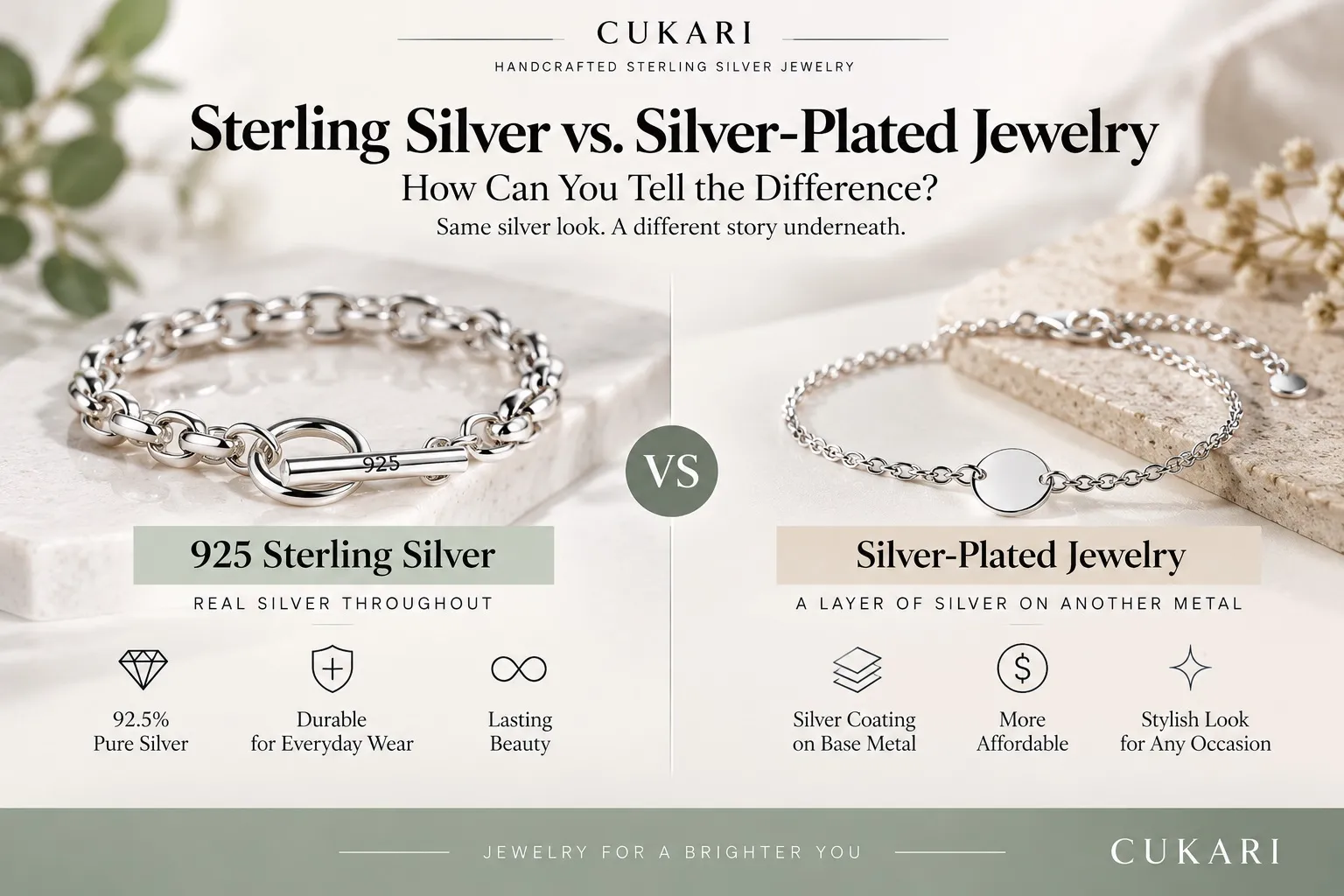
When two pieces of silver-colored jewelry look almost identical, it is easy to assume that they are made from the same material. A bracelet with a bright polished finish may look like sterling silver whether it is made entirely from a silver alloy or simply covered with a thin layer of silver. The difference is not always obvious when a piece is new, but it becomes much more important once you consider how the jewelry will wear, how it should be cared for, and what happens when the surface is scratched.
Sterling silver and silver-plated jewelry are not simply two different grades of the same material. They are constructed differently. Sterling silver contains 92.5% pure silver throughout the material, while silver-plated jewelry has a layer of silver applied to another metal underneath. That difference affects durability, long-term appearance, maintenance, and the amount of silver actually present in the piece.
Understanding the distinction can help you make a more informed purchase, particularly when two pieces look similar but have noticeably different prices.
Table of Contents
- What Is Sterling Silver?
- What Is Silver-Plated Jewelry?
- Sterling Silver vs. Silver-Plated Jewelry: What Is Actually Different?
- How Can You Tell Sterling Silver From Silver-Plated Jewelry?
- Does a 925 Mark Guarantee Genuine Sterling Silver?
- Which One Holds Up Better to Everyday Wear?
- What Happens When Silver-Plated Jewelry Gets Scratched?
- Does Silver-Plated Jewelry Tarnish?
- Why Does Silver-Plated Jewelry Usually Cost Less?
- Is Sterling Silver Better for Sensitive Skin?
- How Should You Care for Sterling Silver and Silver-Plated Jewelry?
- What Should You Check Before Buying Silver Jewelry?
- Common Mistakes When Comparing Sterling Silver and Silver-Plated Jewelry
- Which One Should You Choose?
- Frequently Asked Questions
- The Difference That Matters When You Buy
What Is Sterling Silver?
Sterling silver is a silver alloy containing 92.5% pure silver by weight, with the remaining 7.5% made up of other metals. Copper is commonly used in this alloy because pure silver is relatively soft and needs additional strength for many types of jewelry.
The important point is that sterling silver is not silver-coated jewelry. The silver alloy makes up the material throughout the piece. If a sterling silver bracelet is scratched, for example, the material underneath the surface is still sterling silver alloy rather than a completely different base metal.
The number 925 refers to the same composition: 925 parts of silver per 1,000 parts of the alloy. If you want to understand the meaning of this number in more detail, our guide to what 925 means on silver jewelry explains how the mark relates to silver purity and why sterling silver is made as an alloy.
Sterling silver can have different finishes, weights, shapes, and levels of craftsmanship, so the 925 designation tells you about the metal content rather than automatically telling you that a particular piece is well made. Construction, finishing, clasps, stone settings, and manufacturing quality still matter when evaluating a piece of jewelry.
Why Is Sterling Silver Made With Other Metals?
It might seem that adding another metal makes sterling silver less desirable because it reduces the percentage of pure silver. In practical jewelry making, however, the opposite can often be true. Pure silver is soft enough that pieces made for frequent wear can be more vulnerable to bending, deformation, and surface damage.
The additional alloy metal changes the physical properties of the material, making sterling silver more suitable for jewelry that needs to retain its shape during everyday use. This is one reason 925 sterling silver is so widely used for rings, bracelets, necklaces, earrings, and other wearable pieces.
What Is Silver-Plated Jewelry?
Silver-plated jewelry is made by applying a layer of silver over another material. The underlying material is often a base metal, although the exact metal used beneath the silver coating can vary from one product to another.
Unlike sterling silver, the silver in a plated piece is concentrated at the surface rather than forming the entire body of the jewelry. The thickness and quality of the plating can also vary, so the term “silver-plated” by itself does not tell you exactly how thick the coating is or how long it will remain intact under particular conditions.
A newly plated piece can look very similar to sterling silver because the visible surface is silver. The distinction becomes easier to understand when you consider what is underneath that surface. If the coating eventually becomes worn through, the material below it may become visible.
This difference in construction is the reason that sterling silver and silver-plated jewelry can behave differently after months or years of wear even when they looked nearly identical when first purchased.
Sterling Silver vs. Silver-Plated Jewelry: What Is Actually Different?
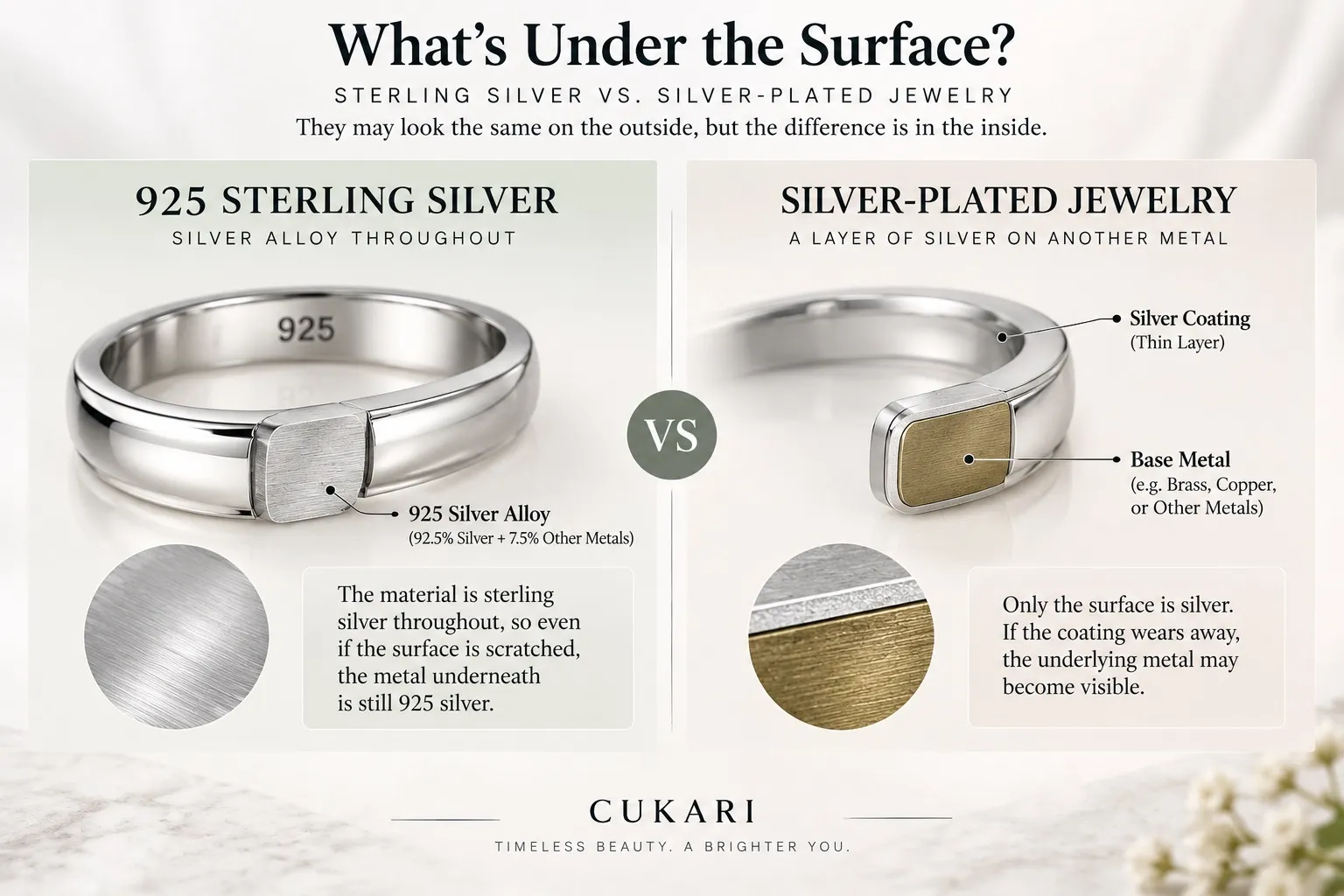
The simplest way to understand the difference is to imagine cutting through the jewelry.
With sterling silver, the material remains a 925 silver alloy throughout the piece. With silver-plated jewelry, you have a silver surface layer over another material. The outside appearance may initially be similar, but the internal construction is fundamentally different.
| Feature | Sterling Silver | Silver-Plated Jewelry |
|---|---|---|
| Basic construction | Silver alloy throughout | Silver coating over another material |
| Silver content | 92.5% silver by weight | Varies; silver is concentrated in the coating |
| Common marking | 925 or sterling | May be marked according to the plating standard used |
| Surface appearance | Can be polished to a bright silver finish | Can closely resemble sterling silver when new |
| What happens with deep scratches | Sterling silver alloy remains underneath | Underlying material may become visible |
| Tarnish | Can tarnish over time | Silver surface can tarnish; worn areas may show the base material |
| Long-term maintenance | Can generally be cleaned and polished appropriately | Requires gentler care to protect the coating |
| Material cost | Generally higher because much more silver is used | Generally lower because only a surface layer is silver |
| Frequent wear | Well suited to many everyday designs | Depends heavily on plating quality and how the jewelry is used |
Price is not determined by metal content alone, since design, labor, gemstones, brand positioning, and other factors also contribute. Nevertheless, the difference in silver content is an important reason that comparable sterling silver pieces often cost more than silver-plated alternatives.
How Can You Tell Sterling Silver From Silver-Plated Jewelry?
It is not always possible to identify the material simply by looking at a finished piece. A high-quality silver-plated item can have a bright, convincing appearance, particularly when it is new. Instead of relying on color or shine alone, look at the information provided by the seller and examine the jewelry itself.
Check the Product Description
The first thing to check is the material description. A reputable seller should clearly distinguish between terms such as sterling silver, 925 silver, silver-plated, silver-tone, and other silver-colored finishes.
Be particularly careful with descriptions that repeatedly use the word “silver” without explaining what the jewelry is actually made from. Silver-colored does not necessarily mean silver, and a piece described as silver-plated should not be treated as though it were sterling silver simply because the surface contains real silver.
Look for a 925 Mark
A 925 mark is an important indication that a piece is represented as sterling silver. It refers to a fineness of 925 parts per thousand silver.
However, a stamp should not be treated as a complete substitute for buying from a trustworthy seller. A mark by itself does not tell you anything about the quality of the workmanship, and dishonest markings can exist. When buying a valuable piece, consider the material description, seller reputation, markings, construction, and, where appropriate, professional testing together.
Examine Areas That Experience Friction
Areas that regularly rub against skin, clothing, tables, or other jewelry can provide useful clues when examining an older piece. Pay particular attention to edges, corners, the inside of rings, bracelet surfaces that contact the wrist, and areas around clasps.
On a plated piece, heavy wear can eventually expose the underlying material if the silver coating has been worn away. The color or appearance of the exposed area may differ from the surrounding silver surface.
That does not mean every discoloration proves that a piece is plated. Sterling silver can also develop scratches, polishing marks, oxidation, or tarnish, so visual inspection should be treated as one part of the assessment rather than a definitive test.
When Professional Testing Makes Sense
If you are dealing with an expensive or potentially valuable piece and the material is uncertain, professional testing is more reliable than trying to identify the metal from photographs or appearance alone. Jewelry professionals can use appropriate testing methods to determine metal composition without relying solely on a hallmark.
For ordinary purchases, however, a clear material description from a reputable seller and a consistent 925 marking can provide much more useful information than trying to judge the metal by weight or color.
Does a 925 Mark Guarantee Genuine Sterling Silver?
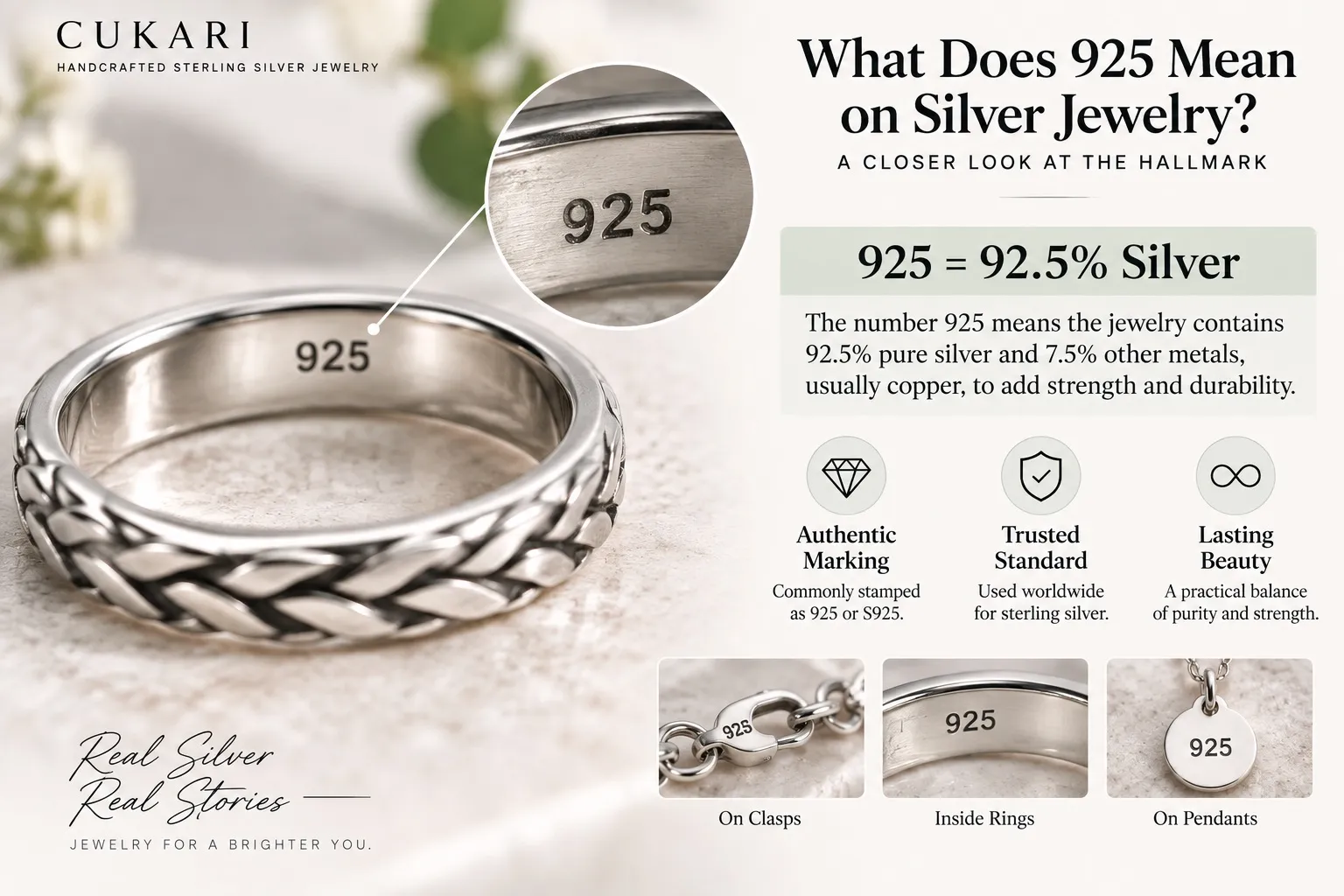
A 925 mark indicates that the piece is being represented as containing 92.5% silver, but the presence of the mark should not be interpreted as an absolute guarantee of authenticity.
This is particularly important when buying jewelry from unfamiliar sellers. A trustworthy product description should clearly state the material, and the seller should be willing to stand behind that description. If you are specifically concerned about authenticity, you can also learn more from our guide on how to spot authentic 925 sterling silver.
It is also worth remembering that genuine sterling silver does not automatically mean superior craftsmanship. A poorly constructed 925 bracelet can still have weak links, an unreliable clasp, rough finishing, or an unsuitable fit. Silver purity and manufacturing quality are related to different aspects of the buying decision.
Which One Holds Up Better to Everyday Wear?
For jewelry that you expect to wear frequently for years, sterling silver generally offers a more practical material structure because the metal is not dependent on a surface coating remaining intact. Scratches and normal surface wear can change its appearance, but they do not reveal a fundamentally different metal underneath.
Silver-plated jewelry can also be perfectly suitable for occasional wear, especially when the design is appealing and the price is an important consideration. Its longevity depends on factors such as plating thickness, construction, friction, exposure to moisture and chemicals, and how carefully the piece is maintained.
The question, therefore, is not simply whether one material is “good” and the other is “bad.” It is more useful to consider how often you intend to wear the jewelry and whether you want the material to remain consistent throughout the piece as the surface ages.
What Happens When Silver-Plated Jewelry Gets Scratched?
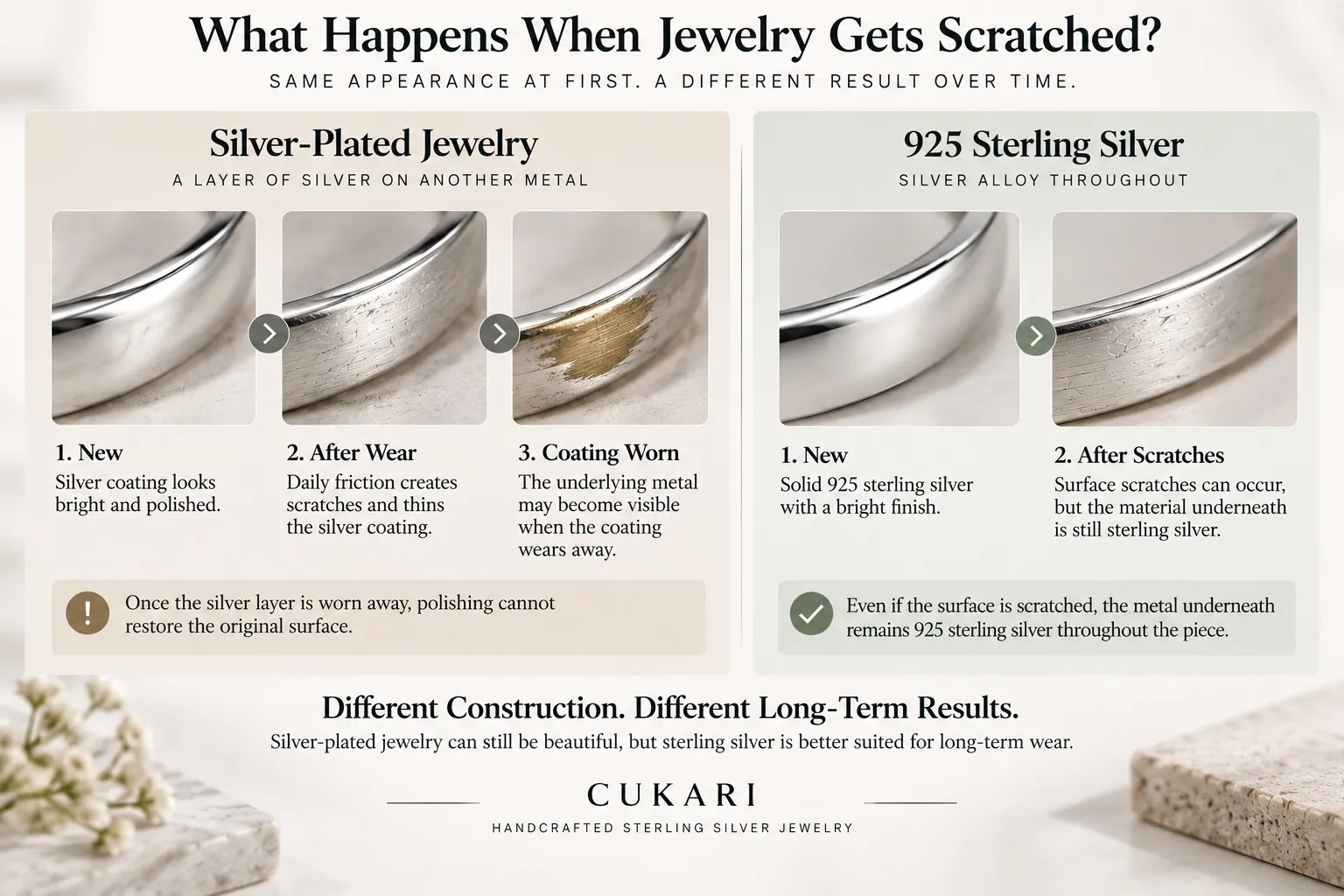
A scratch does not necessarily cause an obvious problem immediately. A shallow mark may affect only the surface of the plating and remain difficult to notice. Repeated friction, however, can gradually reduce the silver coating in areas that receive the most wear.
Once enough of the coating has been removed, the underlying material may become visible. At that point, polishing the piece more aggressively will not restore the original silver surface because the issue is no longer simply tarnish or dirt. The silver layer itself has been reduced or removed.
Sterling silver behaves differently because the material beneath a scratch is still sterling silver alloy. It can certainly become scratched and lose some of its polish, but the underlying metal does not suddenly change to a different base material.
Does Silver-Plated Jewelry Tarnish?
Yes. The silver surface of plated jewelry can tarnish because silver itself can react with substances in the surrounding environment. Sterling silver can also tarnish, so darkening is not a reliable way to determine whether a piece is plated.
This is an important distinction because tarnish and plating wear are two different things. Tarnish is a surface reaction that can often be reduced or removed with suitable cleaning. When plating has worn away, cleaning cannot recreate the silver layer that was originally applied.
If you have noticed your silver jewelry becoming dark or black, our guide to sterling silver jewelry turns black explains the difference between tarnish, surface changes, and actual material damage.
Why Does Silver-Plated Jewelry Usually Cost Less?
One major reason is straightforward: a plated piece uses much less silver than a comparable piece made from sterling silver throughout. The silver is applied as a surface coating rather than forming the body of the jewelry.
That does not mean the price difference is always proportional to the amount of silver. Jewelry prices also reflect design complexity, labor, gemstones, manufacturing methods, brand positioning, packaging, and retail costs.
A simple sterling silver ring can therefore cost less than a highly elaborate plated piece, while a sophisticated sterling silver bracelet can cost considerably more than a basic plated design. Material construction is important, but it is only one part of the final price.
Is Sterling Silver Better for Sensitive Skin?
There is no universal answer because skin reactions depend on the specific metals used, the individual wearer, and the condition of the jewelry.
Sterling silver is an alloy rather than pure silver, so it contains other metals. Silver-plated jewelry also introduces another consideration because the skin may eventually come into contact with the underlying material if the coating becomes worn.
If you have particularly sensitive skin, look for a clear description of the metal composition rather than relying solely on labels such as “silver,” “925,” or “hypoallergenic.” If the exact alloy is important to you, ask the seller for more information before purchasing.
How Should You Care for Sterling Silver and Silver-Plated Jewelry?
The two materials benefit from slightly different approaches to cleaning because sterling silver can generally tolerate appropriate silver-care methods more readily than a thin plated surface.
Caring for Sterling Silver
Sterling silver should be cleaned gently and stored in a dry environment when it is not being worn. A suitable silver polishing cloth can help remove light tarnish and restore the surface, but excessive or aggressive polishing can gradually remove detail from textured or intentionally finished designs.
For pieces with gemstones, delicate textures, oxidized finishes, or intricate details, follow the care recommendations appropriate to that particular design rather than assuming that every silver-cleaning product is suitable.
Caring for Silver-Plated Jewelry
Silver-plated jewelry generally requires more cautious handling because abrasive cleaning can damage the coating. Avoid aggressive polishing, rough cloths, and unnecessary scrubbing, particularly on areas where the plating is already thin.
Keeping plated jewelry away from unnecessary exposure to perfumes, cosmetics, household chemicals, and prolonged moisture can also help preserve the surface. Once plating has significantly worn away, ordinary cleaning cannot restore the missing silver layer.
What Should You Check Before Buying Silver Jewelry?
The most useful information is usually found before you place the order rather than after the jewelry arrives. Start with the material description and make sure the seller clearly distinguishes sterling silver from silver-plated or silver-colored jewelry.
Look for a 925 or appropriate sterling silver marking when the product is described as sterling silver, and check whether the seller provides enough information to understand what you are actually buying. If a product page gives extensive details about the design but remains vague about the metal itself, that is worth treating cautiously.
It is also useful to consider how the piece will be worn. A bracelet that will be worn almost every day has different material requirements from a decorative piece that will only be worn occasionally. The intended use should therefore be part of your decision rather than focusing entirely on the initial appearance or price.
Common Mistakes When Comparing Sterling Silver and Silver-Plated Jewelry
Assuming silver-plated means fake
Silver-plated jewelry can contain genuine silver. The important distinction is that the silver is used as a coating rather than making up the entire material of the jewelry.
Assuming a 925 mark guarantees overall quality
The 925 designation concerns silver fineness. It does not guarantee that a bracelet has a strong clasp, that a ring is well finished, or that a particular design will suit your needs.
Assuming tarnish means the jewelry is plated
Both sterling silver and silver-plated surfaces can tarnish. Darkening alone cannot establish how the jewelry was constructed.
Assuming every plated piece wears out quickly
Plating quality varies, and the way jewelry is worn and maintained also makes a difference. It is more accurate to say that plating is a surface layer that can eventually wear through than to claim that every plated piece has a short lifespan.
Assuming the more expensive piece contains more silver
Price reflects more than material. Design, labor, stones, manufacturing, branding, and other costs can all influence the final price.
Which One Should You Choose?
If you want jewelry for regular wear and prefer a material that remains sterling silver throughout the piece, 925 sterling silver is generally the more practical choice. It offers a useful balance between silver purity and the strength needed for many everyday jewelry designs, which is why it is widely used for bracelets, rings, necklaces, and earrings.
Silver-plated jewelry can make sense when the design is the main priority, the piece will be worn occasionally, or keeping the initial purchase price lower is important. A well-made plated piece can still look attractive and provide good value for its intended use, but it should be purchased with the understanding that the silver surface is a coating and can eventually wear.
For example, if you are looking for a bracelet intended for regular wear, you can explore CUKARI’s collection of women’s sterling silver bracelets to see how different 925 sterling silver designs compare in style and construction.
The better choice ultimately depends on what you expect from the jewelry. If long-term material consistency and frequent wear matter most, sterling silver has a clear advantage. If you mainly want the appearance of silver for occasional use at a lower material cost, silver plating may be sufficient.
Frequently Asked Questions
Is silver-plated jewelry real silver?
Yes, silver-plated jewelry can contain genuine silver, but the silver is applied as a coating over another material. It should not be confused with sterling silver, where the material itself is a 92.5% silver alloy.
Is 925 sterling silver better than silver-plated jewelry?
For frequent, long-term wear, sterling silver is generally the more durable choice because the material remains sterling silver beneath the surface. Silver-plated jewelry can still be appropriate for occasional wear and may cost less.
Can silver plating wear off?
Yes. Friction, repeated wear, chemicals, moisture, and cleaning can gradually reduce a silver coating. Once enough plating has worn away, the underlying material may become visible.
Can silver-plated jewelry be polished?
It can usually be cleaned gently, but aggressive polishing should be avoided because it can remove or thin the silver coating. Tarnish and dirt can sometimes be cleaned away, but worn plating cannot simply be polished back into existence.
Does sterling silver last longer than silver-plated jewelry?
Sterling silver is generally better suited to long-term, frequent wear because it does not depend on a surface silver coating. However, its lifespan still depends on the quality of construction, how it is worn, and how it is maintained.
Can you tell sterling silver from silver-plated jewelry just by looking at it?
Not reliably. New silver-plated jewelry can look very similar to sterling silver. Product descriptions, hallmarks, construction details, and professional testing when necessary provide more useful evidence than appearance alone.
Does silver-plated jewelry tarnish?
Yes. The silver layer itself can tarnish because silver is susceptible to surface reactions. Tarnish should not be confused with the plating wearing away.
The Difference That Matters When You Buy
Sterling silver and silver-plated jewelry can look remarkably similar when they are new, but their construction is fundamentally different. Sterling silver is a 92.5% silver alloy throughout the material, while silver-plated jewelry uses silver as a surface coating over another material.
That distinction becomes most important when you think beyond the first impression. Scratches, friction, cleaning, tarnish, long-term wear, and maintenance all affect the two materials differently. Understanding what is underneath the surface allows you to compare jewelry more fairly and decide whether a particular piece is suitable for the way you intend to wear it.
The goal is not simply to choose the jewelry with the higher price or the brightest finish. It is to understand what you are buying, what the material can reasonably withstand, and whether it matches your expectations for everyday use.