
How to Clean Sterling Silver Jewelry Safely Without Damaging It
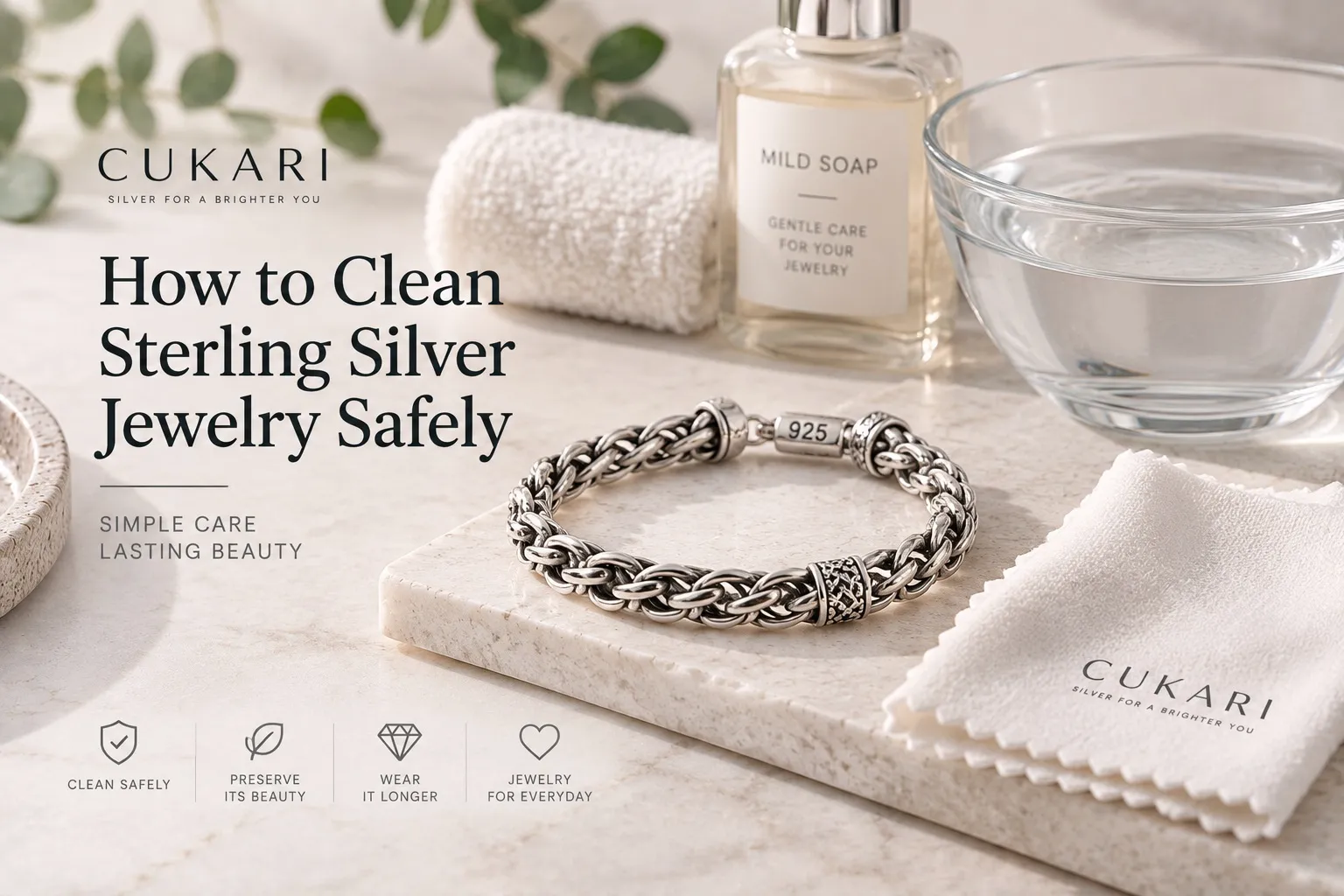
Sterling silver is one of those jewelry materials that can look completely different after a period of wear. A bracelet that was bright and reflective when you bought it may eventually develop a darker surface, a ring may lose some of its shine, and the details on a pendant can become less distinct as tarnish builds up.
That does not necessarily mean anything is wrong with the jewelry. Sterling silver naturally tarnishes, particularly when it is exposed to humidity, perspiration, cosmetics, chlorine, sulfur-containing materials, and certain household chemicals. Regular cleaning can restore much of its original brightness, but the method matters. Cleaning too aggressively can scratch a polished surface, wear away an intentional finish, or cause problems for gemstones and other delicate materials.
The safest approach is usually simpler than people expect: start gently, use the least aggressive method that works, and pay attention to what else is attached to the silver.
Table of Contents
- Why Does Sterling Silver Tarnish?
- Before You Clean: Identify What You Are Working With
- The Safest Way to Clean Lightly Tarnished Sterling Silver
- How to Remove Heavier Tarnish From Sterling Silver
- What Should You Avoid When Cleaning Silver Jewelry?
- How Often Should You Clean Sterling Silver Jewelry?
- How to Clean Different Types of Silver Jewelry
- How to Keep Sterling Silver Clean for Longer
- When Should You Have Silver Jewelry Professionally Cleaned?
- Frequently Asked Questions
- The Best Way to Keep Sterling Silver Looking Good
Why Does Sterling Silver Tarnish?
Sterling silver is not pure silver. Standard sterling silver contains 92.5% silver, with the remaining portion made up of other metals that give the material greater strength and durability. The 925 mark refers to 925 parts silver per thousand.
That composition is one reason sterling silver works so well for everyday jewelry, but it also means the surface can react with its surroundings. Tarnish develops as the metal reacts with substances in the environment, including sulfur compounds, moisture, perspiration, chlorine and some cosmetics. The result may appear as a yellowish, gray, brown or black layer rather than the bright surface you started with.
A tarnished piece is not necessarily damaged. In many cases, the underlying silver is perfectly fine and only the surface needs attention.
This is also why two pieces of sterling silver can age differently even when they are made from the same material. A ring worn every day may come into contact with soap, sweat and hand lotion, while a necklace that spends most of its time under clothing may encounter a different combination of moisture and cosmetics. Storage conditions matter too, particularly in humid environments.
If you have noticed that a piece of silver has become dark rather than simply dusty or dull, you may also want to read our guide on why sterling silver jewelry turns black.
Before You Clean: Identify What You Are Working With
Before reaching for a polishing cloth or silver cleaner, take a close look at the jewelry itself. Not every silver-colored piece should be cleaned in exactly the same way.
A plain sterling silver ring with no stones is relatively straightforward. A heavily textured bracelet with an oxidized finish requires more care, and a silver necklace containing pearls or a porous gemstone should not automatically be treated like a plain silver chain.
Plain Sterling Silver
For plain, non-oxidized sterling silver without delicate stones or other vulnerable materials, mild soap, lukewarm water and a soft cloth are generally a good starting point. GIA recommends warm water and mild soap as a suitable cleaning method for many jewelry materials, while also pointing out that certain gemstones require different treatment.
If the jewelry is only slightly dull, you may not need a dedicated silver cleaner at all.
Oxidized Sterling Silver
Oxidized silver is different because the dark appearance may be intentional rather than tarnish.
Jewelry makers sometimes create a darkened surface to emphasize engraving, recessed areas or other details. Strong polishing can remove that darker finish along with the tarnish you were trying to clean away. Tiffany specifically advises avoiding silver polish on oxidized silver because it can strip the finish.
If you own an oxidized silver piece and like its darker appearance, treat it much more gently than bright polished silver.
For more information, see our guide to what oxidized silver is and how the finish is cared for once that article is published.
Silver-Plated Jewelry
Silver-plated jewelry has a layer of silver over another material rather than being sterling silver throughout. The distinction matters because aggressive polishing can eventually affect the surface layer. The FTC distinguishes sterling silver from silver-plated products and notes that sterling silver represents a minimum silver content of 925 parts per thousand.
If you are unsure what you own, check the product description or hallmark before cleaning it aggressively.
Our guide to sterling silver vs. silver-plated jewelry explains the differences in more detail.
Jewelry With Gemstones or Pearls
This is where a simple silver-cleaning method can become inappropriate.
Many durable gemstones can tolerate gentle cleaning with warm water and mild soap, but GIA specifically warns that porous materials such as turquoise and coral, along with pearls and some treated gemstones, need additional care. Chemicals, heat and inappropriate cleaning methods can affect these materials.
If you are unsure about a stone, identify it before using a silver-cleaning solution. When the value or fragility of the piece is significant, professional cleaning is the safer option.
The Safest Way to Clean Lightly Tarnished Sterling Silver
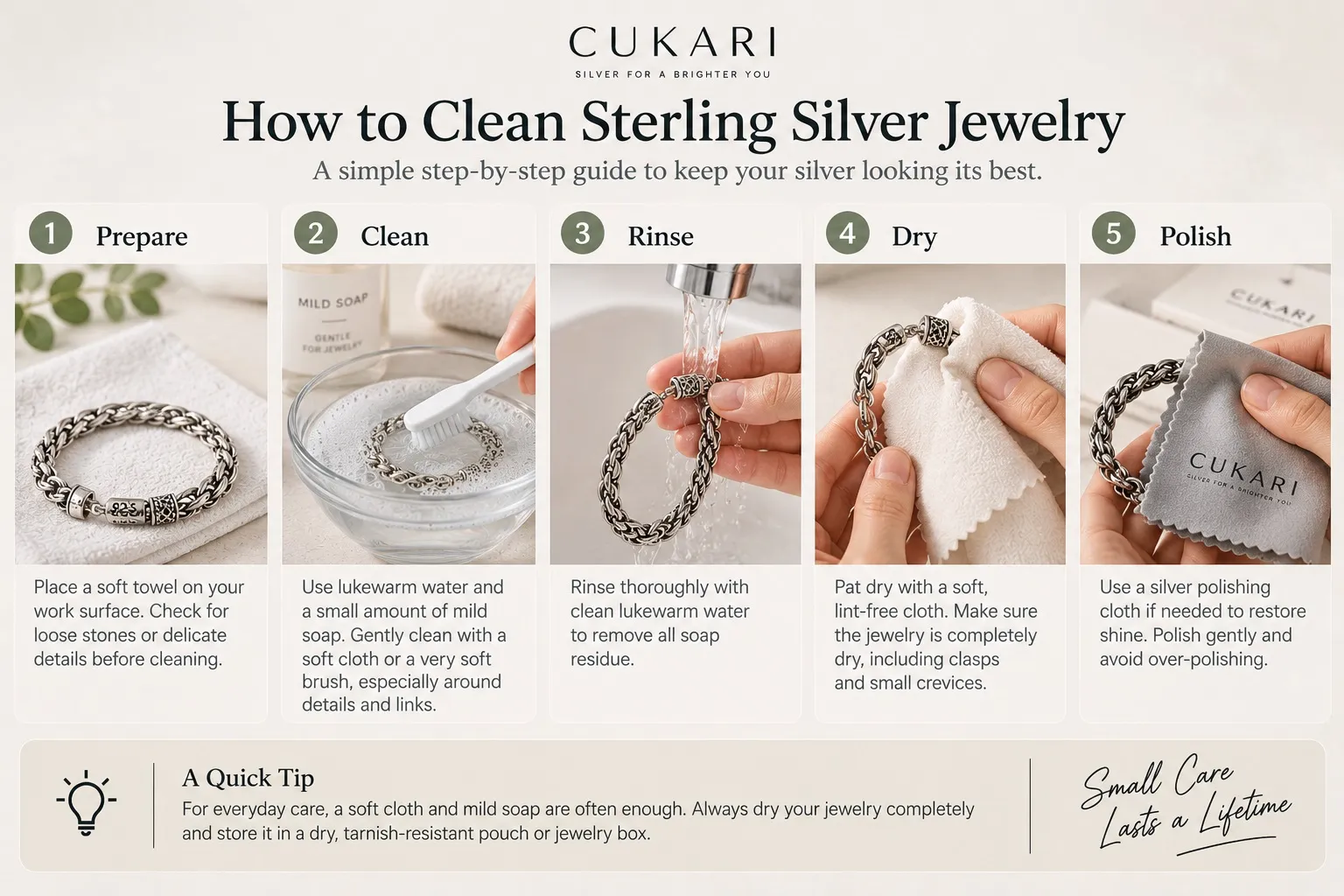
For ordinary sterling silver with light tarnish, there is rarely a reason to begin with an aggressive treatment.
Start with water, mild soap and a soft cloth. If that is enough to remove the surface dirt and oils, you can stop there. There is no advantage to polishing silver more heavily than necessary.
Step 1: Prepare the Jewelry
Remove anything that could scratch the surface and place a clean, soft towel on your work area. A towel is especially useful when cleaning rings or small pieces because it gives you somewhere safe to set them down.
If the jewelry has loose stones, delicate settings, pearls, porous gemstones or an intentional oxidized finish, pause before immersing it in water.
It is also a good idea to clean one piece at a time rather than placing several items together. Silver jewelry can scratch other silver jewelry when pieces rub against each other.
Step 2: Wash With Mild Soap and Lukewarm Water
Mix a small amount of mild soap with lukewarm water. There is no need for extremely hot water or a strong detergent.
Gently wipe the jewelry with a soft cloth. For plain sterling silver with detailed areas, a very soft brush can help loosen dirt from crevices, but use light pressure rather than scrubbing.
Pay particular attention to places where skin oils and product residue tend to accumulate: underneath rings, around bracelet links, near clasps and inside textured surfaces.
For everyday jewelry, this simple cleaning step may be all that is necessary.
Step 3: Rinse Carefully
Once the surface is clean, rinse away the soap with clean lukewarm water.
Be careful when rinsing small jewelry pieces directly over a sink. A ring or earring can disappear down the drain much faster than you might expect. GIA recommends using a container of water when rinsing jewelry if there is a risk of losing a loose stone or the entire piece.
Step 4: Dry Completely
Dry the jewelry thoroughly with a soft, lint-free cloth.
Do not put a piece away while it is still damp. Moisture left around links, settings or recessed areas can make the jewelry look dull again and contributes to the conditions that encourage tarnishing.
For this reason, drying deserves almost as much attention as washing.
Step 5: Polish the Surface
If the silver is clean but still looks slightly dull, use a polishing cloth specifically intended for silver.
Work gently rather than repeatedly rubbing the same area. The purpose is to restore the surface appearance, not to remove as much metal as possible.
Polishing is not something that should be done aggressively every time silver loses its shine. Tiffany notes that polishing removes a small amount of metal and therefore recommends limiting polishing over the lifetime of a piece.
That is particularly relevant for jewelry with fine details, engraved surfaces or sharp edges.
How to Remove Heavier Tarnish From Sterling Silver
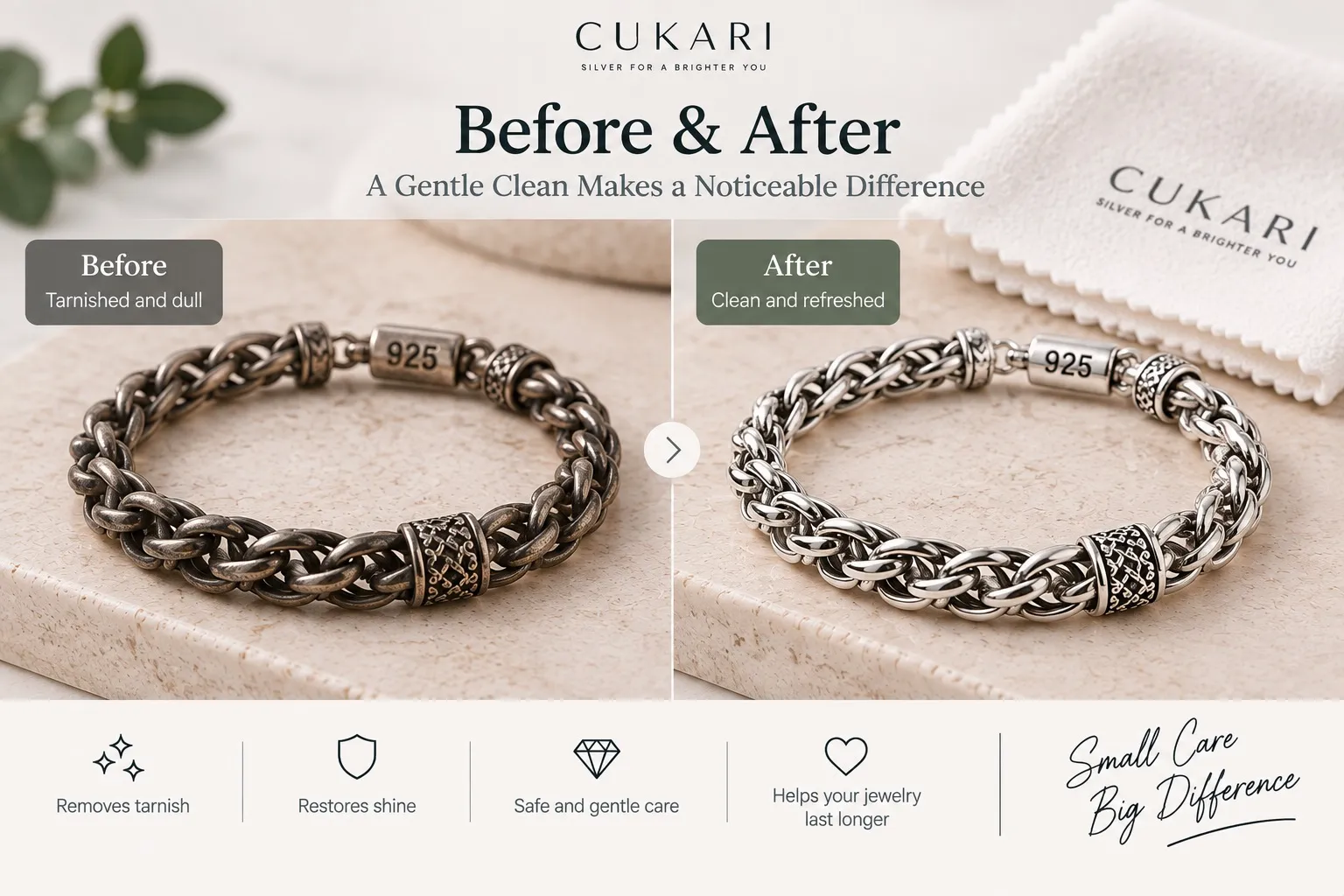
Light tarnish and heavy tarnish do not necessarily require the same approach.
If the jewelry has developed a noticeable dark layer, a silver-specific polishing cloth or cleaner designed for sterling silver may be appropriate for plain, non-oxidized pieces. Follow the product instructions rather than assuming that more cleaner or more pressure will produce a better result.
A soft cloth is often enough for surface tarnish. Work gradually and check the jewelry as you go. You may be surprised by how much of the original shine returns after only a small amount of careful polishing.
The important thing is to stop once the desired surface has been restored. Continuing to polish simply because some darker areas remain in recessed details can be counterproductive, particularly when those darker areas are part of an intentional oxidized finish.
If the jewelry has stones, plating, enamel, an antique finish or a complicated construction, do not assume that a strong silver-cleaning product is safe for every part of the piece.
What Should You Avoid When Cleaning Silver Jewelry?
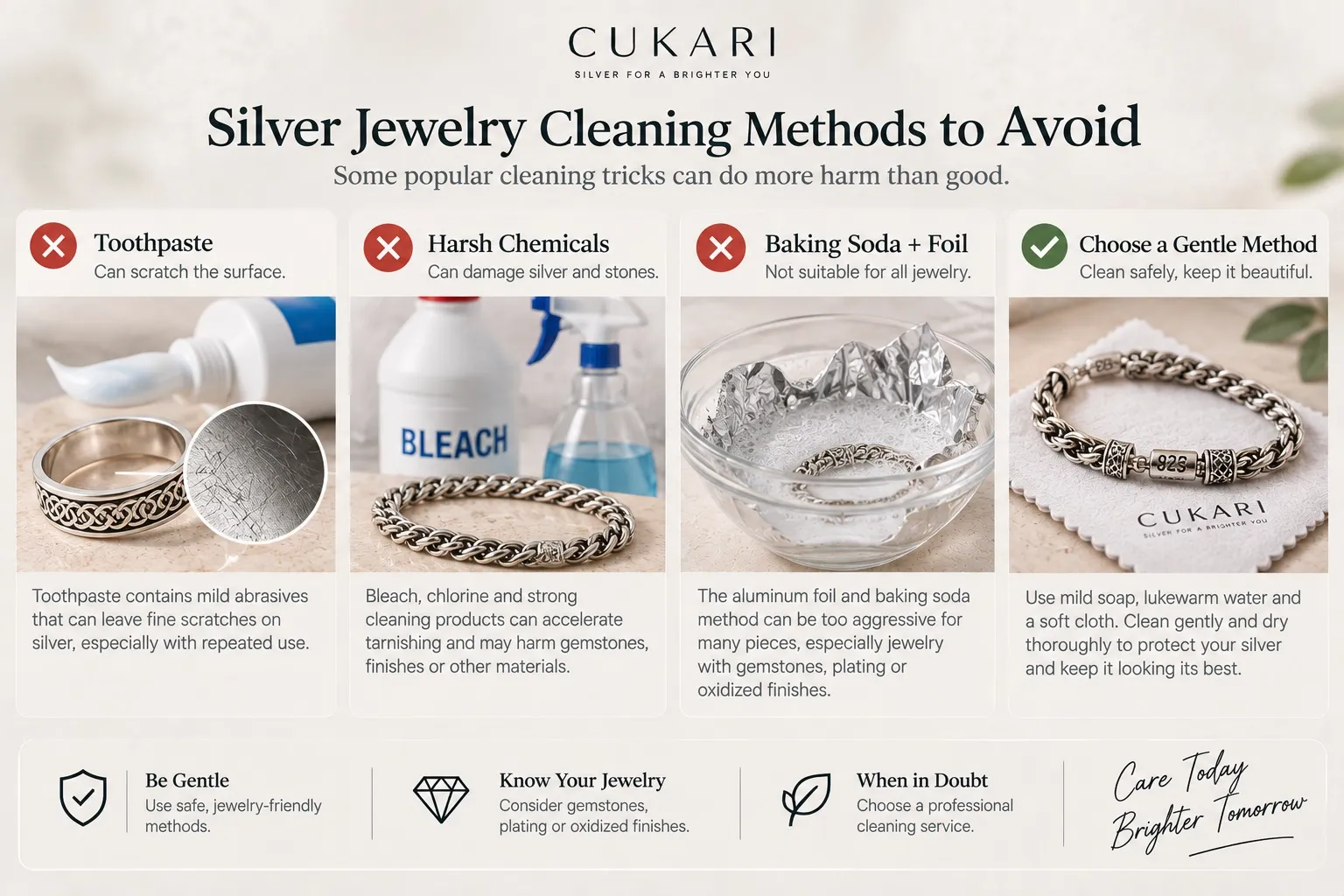
Some silver-cleaning methods have become popular because they are inexpensive and easy to find online. Popularity, however, does not make every method appropriate for every piece of jewelry.
Toothpaste
Toothpaste is often suggested as a household silver cleaner, but it is not a method I would recommend for valuable or frequently worn jewelry. Many toothpastes contain mild abrasives intended for cleaning teeth, and repeated rubbing can leave fine scratches on a polished metal surface.
Once a highly polished silver surface becomes scratched, cleaning will not simply reverse the damage.
Baking Soda and Aluminum Foil
The baking-soda-and-aluminum-foil method is widely discussed online, but it is not a universal solution for sterling silver jewelry.
Tiffany specifically states that electrolytic cleaning using aluminum foil, salt and baking soda in water is not recommended in its care guidance for Rubedo metal, while its broader silver-care guidance emphasizes gentler, controlled cleaning methods.
For a plain inexpensive item, people may choose to experiment with household methods. For a valuable piece, a textured design or jewelry with stones or an intentional finish, there is little reason to take that risk.
Harsh Chemicals and Bleach
Bleach and strong household cleaning products have no place in routine sterling silver jewelry care.
Chlorine and bleach can accelerate tarnishing, while chemicals can also affect gemstones, finishes and other materials used in jewelry. Tiffany and GIA both recommend keeping fine jewelry away from household chemicals and similar substances.
Frequent Aggressive Polishing
A piece of silver does not need to look freshly polished every day.
Some people see a small dark area and immediately reach for a polishing cloth, then continue rubbing until every trace of discoloration has disappeared. That approach can be unnecessarily harsh. Polishing removes a small amount of metal, so it should be used when there is a reason to use it rather than as a daily cleaning routine.
How Often Should You Clean Sterling Silver Jewelry?
There is no single cleaning schedule that works for every piece of sterling silver jewelry.
A bracelet worn every day may need occasional cleaning because it is constantly exposed to skin oils, sweat, lotions and other substances. A necklace that is worn only occasionally may remain bright for much longer.
Instead of cleaning according to a fixed calendar, look at the condition of the jewelry.
If the piece still looks clean and bright, leave it alone. If it has accumulated visible dirt or the surface has started to look dull, give it a gentle cleaning. When tarnish becomes more noticeable, use a silver polishing cloth or suitable silver cleaner where appropriate.
There is another useful point here: wearing sterling silver regularly does not necessarily make it deteriorate faster. Tiffany notes that frequently worn silver can actually require less special care, although it should still be protected from substances such as chlorine, sulfur, cosmetics and household chemicals.
How to Clean Different Types of Silver Jewelry
Different jewelry shapes create different cleaning problems, even when they are made from exactly the same silver.
Silver Rings
Rings usually collect the most residue because they remain in close contact with the skin and are exposed to hand washing, lotions and everyday activities.
For a plain sterling silver ring, wash it gently with lukewarm water and mild soap, rinse thoroughly and dry it completely. A soft cloth can then be used to restore some shine.
If the ring contains a gemstone, identify the stone before using any cleaner. Pearls, turquoise, coral and other porous or delicate materials may require different care.
You can browse our collection of women’s sterling silver rings if you are looking for everyday sterling silver styles.
Silver Bracelets
Bracelets have another problem: links and textured surfaces can trap dirt.
A soft cloth works well on smooth surfaces, while a very soft brush can help with difficult-to-reach areas on plain sterling silver. After washing, make sure water has not remained between the links.
For pieces with more elaborate textures, take your time rather than increasing the pressure.
Our women’s sterling silver bracelets include a variety of chain styles and link designs, each of which can respond slightly differently to cleaning.
Silver Bangles
Closed bangles are relatively easy to wipe down because they have fewer moving parts, while open cuffs and textured bangles can collect residue around their decorative surfaces.
A soft cloth is usually the best first step. If washing is necessary, dry the entire piece carefully afterward.
You can see the range of women’s sterling silver bangles for examples of different bangle constructions.
Silver Necklaces
Chains can be more difficult because individual links move against one another and can hold residue in small spaces.
Lay the necklace flat on a soft towel while cleaning rather than holding it in the air. This gives you more control and makes it easier to work along the chain without pulling on the links.
Our women’s sterling silver necklaces include both simple chains and more detailed pendant styles.
Silver Earrings
Earrings tend to come into contact with cosmetics, hair products and skin oils, particularly around the back and post.
For plain sterling silver earrings, gentle cleaning followed by thorough drying is usually sufficient. If the earrings contain pearls, porous stones or other delicate materials, use a method appropriate for those materials rather than treating the entire piece as ordinary silver. GIA notes that different gemstones can have very different cleaning requirements.
How to Keep Sterling Silver Clean for Longer
Cleaning is only half of silver care. The easier way to reduce tarnish is to limit the exposure that causes it in the first place.
Remove sterling silver jewelry before swimming, showering, exercising or doing household cleaning. It is also sensible to put jewelry on after applying perfume, lotion or other cosmetics rather than exposing the silver to those products unnecessarily. Tiffany specifically recommends avoiding these situations because chlorine, perspiration, cosmetics and other substances can contribute to tarnishing.
When you are not wearing the jewelry, keep it somewhere dry. A tarnish-resistant pouch or jewelry box with separate compartments is preferable to leaving several pieces loose together.
Humidity deserves particular attention. If you live in a humid environment, a small desiccant packet inside the storage area can help keep moisture under control. Tiffany also recommends keeping silver away from rubber products because sulfur in rubber can contribute to tarnishing and corrosion.
If your jewelry has already developed black tarnish, our guide on why sterling silver turns black explains what is happening and what you can do about it.
When Should You Have Silver Jewelry Professionally Cleaned?
Most ordinary sterling silver jewelry can be maintained at home, but there are situations where professional attention makes more sense.
Consider professional cleaning or inspection if a gemstone appears loose, a setting has moved, a clasp is not closing correctly, or the jewelry has a complicated finish that you are afraid of damaging.
The same applies to valuable pieces, antique jewelry and designs containing delicate or porous gemstones. Cleaning the metal is not the only concern in these cases; the condition of the entire piece needs to be considered.
Professional cleaning is also useful when repeated home polishing has failed to restore the appearance of the jewelry. At that point, continuing to rub the surface harder is unlikely to solve the underlying problem.
Frequently Asked Questions
Can I clean sterling silver with soap and water?
Yes, for many plain sterling silver pieces, mild soap and lukewarm water are a sensible first cleaning method. Dry the jewelry thoroughly afterward. Jewelry containing pearls, porous gemstones, delicate treatments or special finishes may require a different approach.
Can toothpaste clean sterling silver?
Toothpaste is commonly recommended online, but it is not the method I would choose for fine sterling silver jewelry. Its abrasives can scratch polished surfaces, particularly if the jewelry is cleaned this way repeatedly.
Can I use baking soda to clean sterling silver?
Baking soda appears in many homemade silver-cleaning methods, including the aluminum-foil method. However, it is not appropriate for every piece, particularly jewelry with gemstones, plating or special finishes. A silver-specific polishing cloth or cleaner is generally easier to control.
How do I clean black sterling silver?
If the black appearance is ordinary tarnish on plain sterling silver, start with gentle cleaning and then use a silver polishing cloth if necessary. If the black color is part of an intentional oxidized finish, do not polish it away. Oxidized silver is deliberately darkened, and aggressive cleaning can remove that finish.
Can I use a silver polishing cloth on sterling silver?
Yes. A cloth designed specifically for silver can be useful for removing light tarnish and restoring shine. Use it gently and avoid excessive polishing, because polishing removes a small amount of metal over time.
Can sterling silver jewelry be cleaned with a toothbrush?
A very soft brush can help clean plain sterling silver with textured or hard-to-reach areas, but it should be used gently. Avoid brushing delicate gemstones or finishes unless you know the material can tolerate it.
Can I clean sterling silver jewelry with gemstones?
Sometimes, but the answer depends on the gemstone. GIA notes that many gemstones can tolerate warm water and mild soap, while porous materials such as turquoise and coral and delicate pearls need special care.
The Best Way to Keep Sterling Silver Looking Good
Sterling silver does not need complicated maintenance. What matters most is using the right amount of care for the condition of the jewelry.
For a plain piece with light tarnish, begin with mild soap, lukewarm water and a soft cloth. Dry it carefully, then polish it gently if the surface still looks dull. If the jewelry has an oxidized finish, plating, gemstones or other delicate materials, change the approach rather than assuming that a stronger cleaner will produce a better result.
Just as importantly, try to prevent unnecessary exposure in the first place. Removing silver jewelry before swimming, showering, exercising or using household chemicals can reduce the amount of cleaning it needs later. Proper storage keeps moisture and other tarnish-producing materials away when the jewelry is not being worn.
And if a piece becomes slightly darker over time, that is not a reason to panic. Tarnish is a normal part of caring for sterling silver. In most cases, a little patience and a gentle cleaning routine are enough to bring the surface back to life.