
How to Store Sterling Silver Jewelry to Prevent Tarnish
Sterling silver jewelry can look bright and polished when you first receive it, but its appearance can gradually change when it is left exposed to air, moisture, cosmetics, household chemicals, and other materials that encourage tarnishing. This is a normal characteristic of silver rather than a sign that the jewelry has suddenly become damaged.
The way you store your jewelry between wears can make a noticeable difference, especially if you have several pieces that you do not wear every day. A silver bracelet left loose in a humid bathroom, for example, is exposed to very different conditions from one that has been cleaned, dried, separated from other jewelry, and kept inside a suitable pouch or jewelry box.
Good storage does not require an expensive jewelry cabinet or complicated routine. What matters is controlling the environment around the silver and preventing unnecessary contact with moisture, sulfur-containing materials, scratches, and other sources of damage. Once these habits become part of your normal jewelry routine, keeping sterling silver looking bright becomes much easier.
Table of Contents
- Why Does Sterling Silver Tarnish When It Is Stored?
- What Is the Best Way to Store Sterling Silver Jewelry?
- Keep Sterling Silver Completely Dry Before Storage
- Use a Tarnish-Resistant Pouch or Jewelry Box
- Store Each Piece Separately
- Should Sterling Silver Jewelry Be Stored in an Airtight Bag?
- Where Should You Store Sterling Silver Jewelry?
- Why You Should Not Store Silver in the Bathroom
- What Materials Should You Keep Away From Sterling Silver?
- How Should You Store Silver Rings, Bracelets, Necklaces and Earrings?
- How to Store Sterling Silver Jewelry for a Long Time
- What About Humid Climates?
- Should You Clean Sterling Silver Before Storing It?
- Common Sterling Silver Storage Mistakes
- Foire aux questions
- A Simple Storage Routine That Works
Why Does Sterling Silver Tarnish When It Is Stored?
Tarnishing is one of the most common changes people notice when sterling silver jewelry has been sitting unused for a period of time. Silver does not rust in the same way iron does, but its surface can react with substances in the surrounding environment and gradually develop a darker, duller appearance.
Sterling silver is particularly susceptible because it is an alloy rather than completely pure silver. The standard 925 composition contains 92.5% silver, with the remaining portion made up of other metals that help make the material more suitable for jewelry. If you want to understand why sterling silver is made this way and what the 925 mark actually means, see our guide to what 925 means on silver jewelry.
The storage environment matters because silver can react with sulfur-containing substances, humidity, perspiration, chlorine and certain chemicals. Tiffany & Co., for example, specifically recommends keeping silver dry and limiting exposure to air, humidity, sulfur-containing materials and strong chemicals when storing silver jewelry.
Storage can also become more important when you are dealing with plated jewelry, because the silver layer on a plated piece is much thinner than the material in a solid sterling silver item. If you are not sure what type of silver jewelry you have, our comparison of sterling silver and silver-plated jewelry explains the difference and what happens when the surface begins to wear.
This is why two pieces of sterling silver can age differently even when they were made from the same material. One might remain relatively bright in a dry jewelry box, while another develops noticeable tarnish after being left in a humid room or exposed to cosmetics and moisture.
What Is the Best Way to Store Sterling Silver Jewelry?
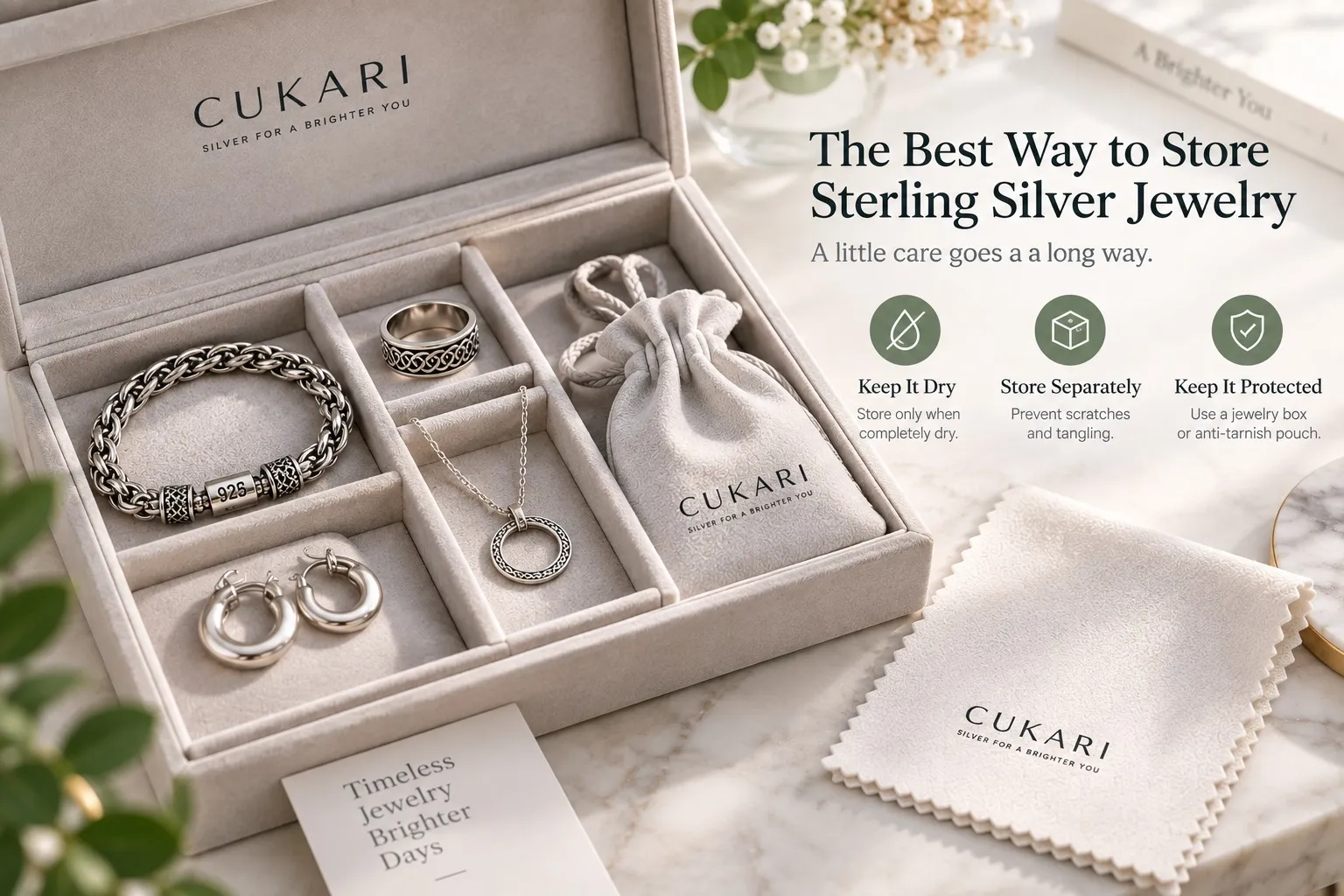
The best storage method is surprisingly simple: clean the jewelry when necessary, make sure it is completely dry, keep it away from moisture and chemicals, separate individual pieces, and store the silver in a suitable pouch or lined jewelry box.
A good storage setup should accomplish two things at the same time. It should reduce the conditions that encourage tarnishing, while also protecting the jewelry from physical damage. Preventing tarnish is only part of the job; chains can become tangled, polished surfaces can become scratched, and delicate clasps or decorative details can be damaged when several pieces are thrown into the same compartment.
The Gemological Institute of America recommends keeping sterling silver in an anti-tarnish bag or cloth and notes that jewelry should not simply be left loose in a drawer or on top of a dresser, where it can be scratched or damaged.
For everyday jewelry, a simple system is usually enough. A separate anti-tarnish pouch for each important piece, or a jewelry box with individual compartments, gives the silver some protection without making storage unnecessarily complicated.
Keep Sterling Silver Completely Dry Before Storage
Moisture is one of the easiest storage problems to overlook. A piece of jewelry may appear dry after washing, but water can remain around clasps, links, textured surfaces and other small areas where it is difficult to see.
Before putting sterling silver away, take a moment to make sure it is completely dry. If you have just cleaned the jewelry, gently pat it with a soft, lint-free cloth and allow it to dry fully before closing it inside a pouch or box.
This is particularly important in humid environments. Tiffany recommends keeping silver absolutely dry during storage and suggests using a small packet of desiccant crystals in a closed storage area when the climate is humid.
A useful habit is to think about where the jewelry was worn immediately before storage. If you have been exercising, swimming, showering, applying lotion, or spending time outdoors in humid conditions, the jewelry should not go directly back into a closed pouch. Wipe it first and make sure it is dry.
If the jewelry has already developed tarnish, it is better to clean it before putting it away rather than simply sealing the tarnish inside the storage container. Our guide on how to clean sterling silver jewelry safely explains how to remove everyday dirt and tarnish without using unnecessarily aggressive cleaning methods.
Use a Tarnish-Resistant Pouch or Jewelry Box
Not every jewelry box offers the same level of protection for sterling silver. A decorative box may look beautiful on a dresser, but if it has no lining, no separate compartments and no protection against tarnish, it may not be the most practical choice for silver jewelry.
A tarnish-resistant pouch or a jewelry box lined with suitable tarnish-resistant material is a better option for pieces that are not being worn regularly. Tiffany recommends tarnish-resistant cloth or silver storage boxes with appropriate lining, while GIA also recommends anti-tarnish bags or cloth for sterling silver.
Soft fabric also reduces the chance of scratches caused by contact with the storage container itself. This matters particularly for polished silver, because even relatively small scratches can become visible when light reflects across a smooth surface.
For valuable or frequently worn pieces, a jewelry box with individual compartments is especially useful. It gives each item its own space rather than forcing several pieces together in one small compartment.
Is an Anti-Tarnish Cloth Worth Using?
An anti-tarnish cloth can be useful, particularly for sterling silver pieces that spend more time in storage than on your wrist or around your neck. Its purpose is not to make the silver permanently immune to tarnishing, but to create a more suitable storage environment and reduce exposure to the conditions that encourage surface discoloration.
You do not necessarily need a special cloth for every inexpensive piece of jewelry, but it is a practical addition for pieces you want to preserve carefully, especially sterling silver bracelets, rings and necklaces with polished surfaces.
Store Each Piece Separately
One of the simplest improvements you can make to your jewelry storage is also one of the easiest to ignore: do not throw several pieces of silver jewelry into the same small space.
Bracelets can become tangled with necklaces, earrings can scratch polished surfaces, and rings can rub against neighboring pieces. Even when all of the jewelry is made from sterling silver, constant contact can create unnecessary marks and wear.
Separate storage is particularly important for pieces with different finishes. A highly polished bracelet should not repeatedly rub against an oxidized silver piece, textured design or jewelry containing harder materials.
Individual pouches, small compartments, soft jewelry trays and divided storage boxes all work well. The exact container is less important than giving each piece enough room to remain protected.
Tiffany similarly recommends storage boxes with separate spaces for individual pieces, particularly when jewelry needs to be organized at home or while traveling.
Should Sterling Silver Jewelry Be Stored in an Airtight Bag?
Reducing exposure to air can help slow tarnishing, but “airtight” should not be treated as a magic solution. The more important point is to put the jewelry away clean and completely dry before limiting its exposure to the surrounding environment.
For pieces that are stored for a long period, a suitable anti-tarnish pouch or a well-designed jewelry storage bag can be useful. Some people also use small sealed bags designed for jewelry storage, particularly when traveling or putting seasonal pieces away.
However, sealing damp jewelry inside an airtight container is counterproductive. If moisture is trapped inside with the silver, the closed environment does not solve the underlying problem.
The better sequence is simple: clean if necessary, dry thoroughly, place the piece in suitable protective storage, and then keep that storage container in a dry location.
Where Should You Store Sterling Silver Jewelry?
The location of your jewelry storage matters almost as much as the container itself.
A bedroom drawer, dressing table drawer or dedicated jewelry cabinet is generally more suitable than a bathroom or another area where the jewelry is regularly exposed to steam and humidity. The storage area should be dry, reasonably stable in temperature and away from household chemicals.
If you keep your jewelry in a drawer, consider using a soft-lined tray or individual pouches rather than placing the pieces directly against the drawer surface. If you use a jewelry box, choose one with separate sections so necklaces, bracelets, rings and earrings are not constantly rubbing against one another.
If your home is particularly humid, a small desiccant packet inside a closed jewelry box can be helpful. Tiffany specifically recommends desiccant crystals for humid climates when storing silver in a closed box or flannel roll.
Why You Should Not Store Sterling Silver Jewelry in the Bathroom
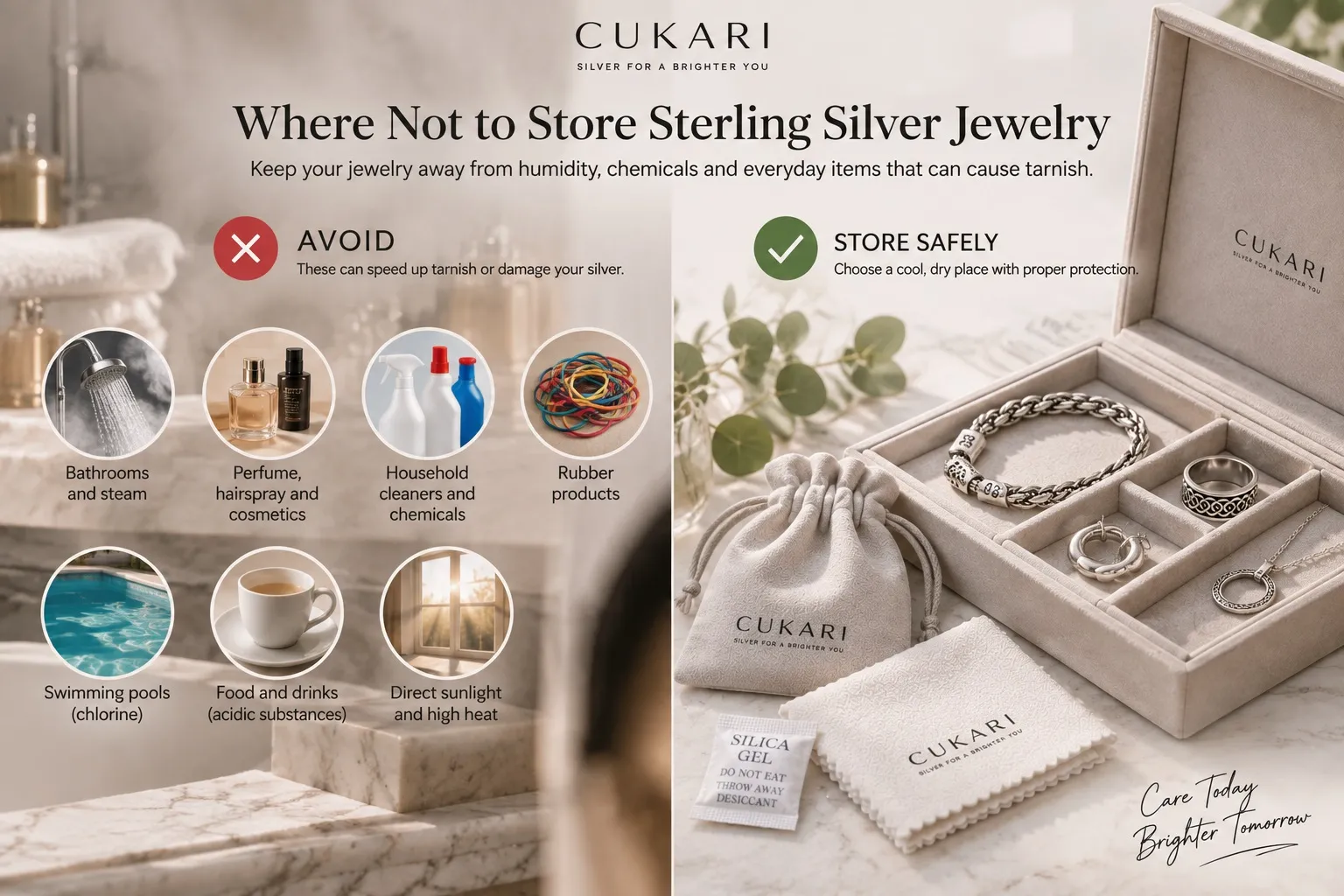
The bathroom may seem like a convenient place to keep jewelry because that is often where people put it on and take it off, but it is generally a poor long-term storage location for sterling silver.
Repeated exposure to steam, water droplets and high humidity creates an environment that is less suitable for silver storage. The problem becomes even greater when the jewelry is left near hairspray, perfume, lotions, soaps or cleaning products.
Tiffany lists showering, bathing, swimming, exercising and using lotions, hair products and fragrances among situations in which sterling silver should be protected from exposure.
A much better routine is to remove the jewelry, wipe it if necessary, and return it to its normal storage location rather than leaving it beside the sink until the next day.
What Materials Should You Keep Away From Sterling Silver?
Silver does not only react with moisture. The materials surrounding your jewelry can also influence how quickly it tarnishes or becomes damaged.
One surprisingly common example is rubber. Rubber products can contain sulfur compounds that contribute to tarnishing, which is why Tiffany specifically advises against storing silver jewelry in contact with rubber bands or other rubber products.
Some papers and packaging materials can also contain substances that are not ideal for long-term silver storage. This is one reason a jewelry pouch or properly lined storage box is preferable to wrapping a bracelet in whatever paper happens to be nearby.
You should also keep sterling silver away from household cleaning products, bleach and strong chemicals. These substances are not suitable storage companions, even if the jewelry is only exposed to them indirectly.
How Should You Store Silver Rings, Bracelets, Necklaces and Earrings?
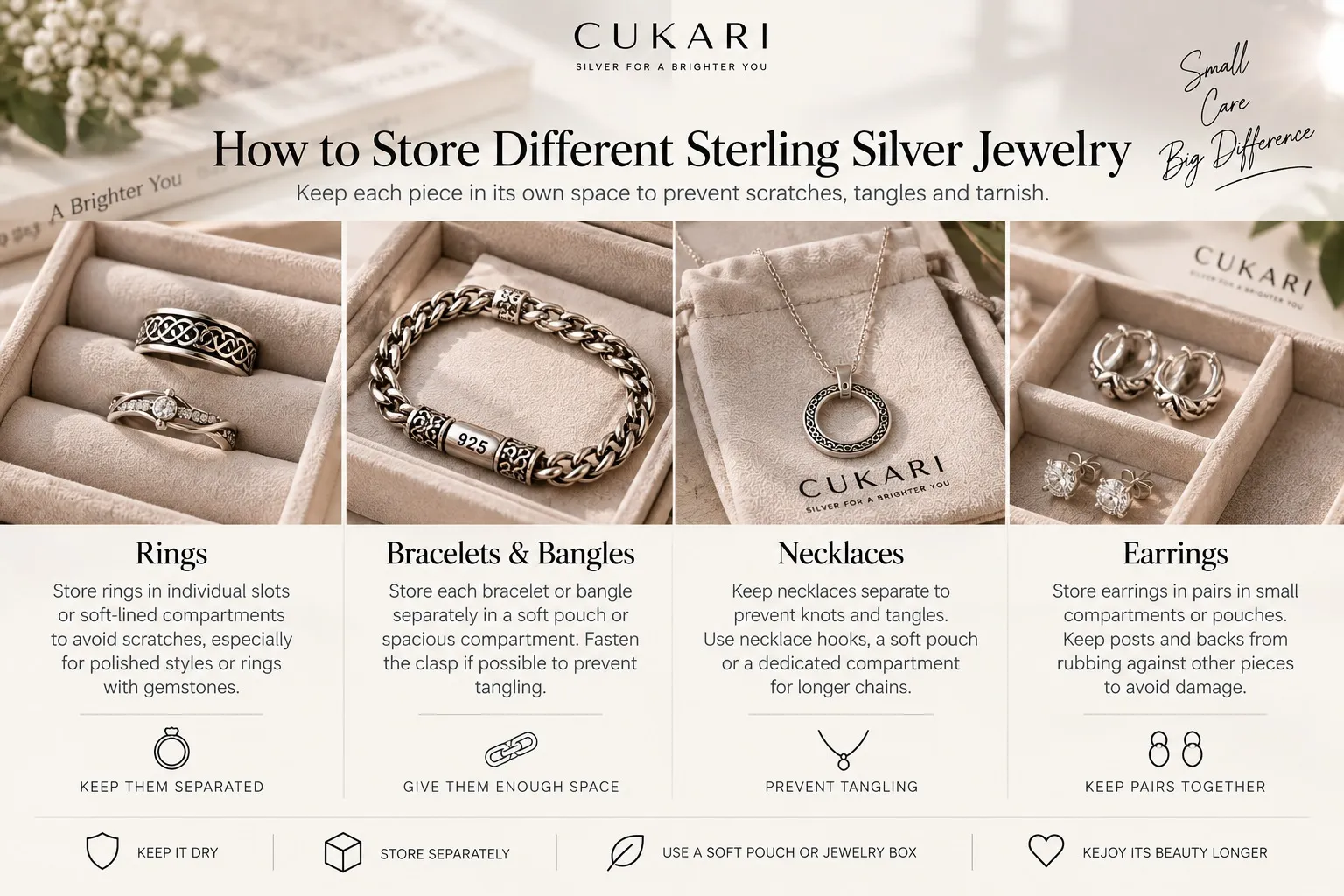
Different types of jewelry have slightly different storage problems, so it is worth adjusting the way you organize them rather than treating every piece exactly the same.
How to Store Sterling Silver Rings
Rings are relatively easy to store because they do not usually tangle, but they can easily become scratched when several rings are placed together. Keep them in individual slots or small soft-lined compartments, particularly if they have polished surfaces or raised decorative elements.
If a women’s silver ring contains gemstones, make sure it is not stored in a way that allows the stone or setting to repeatedly hit another piece of jewelry.
How to Store Sterling Silver Bracelets
Bracelets benefit from individual storage because chains and links can become tangled or scratched when mixed together.
For a substantial sterling silver bracelet, lay it flat inside a soft pouch or place it in a sufficiently large compartment so that it is not forced into a tight coil. If the bracelet has a clasp, fastening it before storage can also help prevent the chain from catching on other pieces.
You can browse CUKARI’s collection of women’s sterling silver bracelets if you want to compare different bracelet structures and styles that may require slightly different storage arrangements.
The same principle applies to bangles, particularly polished or open-cuff styles. They should have enough room in the storage compartment that they are not constantly rubbing against other metal pieces. You can see examples of different designs in CUKARI’s collection of women’s sterling silver bangles.
How to Store Sterling Silver Necklaces
Necklaces are among the easiest pieces to tangle, so they should ideally be stored separately rather than placed loose inside a jewelry box.
A divided jewelry box with necklace hooks is useful for pieces that are worn regularly. For longer-term storage, a soft pouch can work well as long as the chain is positioned so that it does not become tightly knotted.
You can also browse CUKARI’s sterling silver necklaces for examples of different chain and pendant designs.
How to Store Sterling Silver Earrings
Earrings are small enough to disappear inside a crowded jewelry box, and their posts or backs can scratch other pieces. Keeping pairs together in small compartments or individual pouches makes them easier to find and reduces unnecessary contact with other jewelry.
This is particularly useful for polished hoops, drop earrings and other designs with delicate decorative elements.
How to Store Sterling Silver Jewelry for a Long Time
If you are putting sterling silver jewelry away for several months, the storage routine becomes more important than it is for pieces you wear every week.
Start by checking each item. Remove visible dirt, fingerprints, lotion residue or tarnish using a suitable cleaning method, then dry the jewelry completely. Do not put a damp piece into a closed pouch simply because you are planning to leave it there for a long time.
Once the jewelry is clean and dry, place each piece in an anti-tarnish pouch or a suitable compartment. Keep the storage container in a dry area away from bathrooms, kitchens, direct sunlight, household chemicals and materials that may contain sulfur.
It is also worth checking stored jewelry occasionally rather than leaving it untouched for years. Besides looking for tarnish or physical damage, this is a useful opportunity to check the markings and construction of pieces you are unsure about. If you have questions about whether a bracelet is actually sterling silver, our guide on how to tell if a 925 sterling silver bracelet is real covers the most useful things to look for.
For jewelry containing gemstones, pearls or delicate finishes, follow the care requirements for those materials as well. Storage advice for plain sterling silver cannot automatically be applied to every type of jewelry.
What About Humid Climates?
Humidity deserves extra attention because it can make silver storage more challenging.
If you live in a humid region, storing jewelry in an open tray on a dresser may not provide enough protection, particularly if the jewelry is rarely worn. A closed jewelry box, anti-tarnish pouch and a suitable desiccant packet can provide a more controlled environment.
The important point is not to confuse a closed container with a dry environment. The jewelry should already be dry when it goes inside, and the storage container should be checked from time to time.
If humidity is a persistent problem in your home, the storage location itself may need more attention than the jewelry box. A dry interior room is generally more suitable than an area regularly exposed to bathroom steam or outdoor moisture.
Should You Clean Sterling Silver Before Storing It?
Yes, particularly when the jewelry has been worn for an extended period.
Skin oils, perspiration, cosmetics and other residues can remain on the surface after wearing. Leaving those substances on the jewelry while it sits in storage is not ideal, especially if the piece will not be worn again for several weeks or months.
This does not mean you need to polish your silver every time you take it off. Over-polishing can remove a small amount of metal, and intentionally oxidized finishes can be altered by aggressive cleaning. Tiffany specifically warns that excessive polishing can remove an oxidized finish and recommends treating oxidized silver differently from ordinary polished silver.
For everyday storage, a gentle wipe with a soft cloth may be all that is needed. If the piece has visible dirt or tarnish, use the appropriate cleaning method before putting it away.
Common Sterling Silver Storage Mistakes
The most common storage mistakes are usually not dramatic. They are small habits that seem harmless when done once, but become more significant when repeated over months and years.
Leaving Silver Loose in a Drawer
A drawer may keep jewelry out of sight, but it does not protect the pieces from rubbing against one another. Chains become tangled, polished surfaces become scratched and small earrings can easily become mixed with other pieces.
Storing Silver While It Is Still Damp
Putting jewelry away immediately after washing or wearing it in humid conditions can trap moisture in the storage environment. Always give the piece enough time to become completely dry.
Keeping Jewelry in the Bathroom
Convenience is the main reason people do this, but bathrooms expose silver to repeated humidity and steam. A bedroom drawer or dedicated jewelry storage area is generally more appropriate.
Using Rubber Bands Around Jewelry
Rubber bands may seem like an easy way to keep chains organized, but sulfur-containing rubber can contribute to silver tarnishing.
Putting Every Piece Into One Pouch
A pouch protects the jewelry from some environmental exposure, but it cannot prevent pieces from rubbing against each other. Individual compartments or separate pouches are preferable.
Polishing Every Time the Silver Looks Slightly Dull
Silver polishing is useful when tarnish needs to be removed, but it should not become an automatic step every time the surface loses a little of its original brightness. Repeated polishing removes a small amount of metal, and excessive cleaning can affect certain finishes.
Frequently Asked Questions About Storing Sterling Silver
Should I keep sterling silver in a jewelry box?
Yes. A jewelry box can be an excellent storage option as long as it provides a dry environment, protects the jewelry from scratches and preferably has separate compartments or a tarnish-resistant lining.
Is it better to store sterling silver in a pouch or a box?
Both can work well. A tarnish-resistant pouch is convenient for individual pieces, while a divided jewelry box is useful when you have a larger collection and want to keep different pieces organized.
Can I store sterling silver in a plastic bag?
A suitable jewelry-storage bag can be useful for limiting exposure to air, but the jewelry must be completely dry before being enclosed. Ordinary plastic bags are not necessarily designed for long-term jewelry storage, so a dedicated anti-tarnish pouch is generally a better choice.
Should I put silica gel with my sterling silver?
A small desiccant packet can be useful in humid conditions, particularly inside a closed storage box. Tiffany specifically recommends desiccant crystals for silver storage in humid climates.
Can sterling silver tarnish inside a jewelry box?
Yes. A jewelry box does not make silver completely immune to tarnishing. If the environment contains humidity or sulfur-containing materials, or if the jewelry is stored with residues from skin or cosmetics, tarnish can still develop.
Can I store sterling silver with gold jewelry?
It is better to keep different pieces separated rather than allowing them to rub against each other. The main concern is physical contact and scratching, not simply the fact that one piece is silver and another is gold.
Does sterling silver tarnish faster when it is not worn?
Not necessarily in every situation. Tarnishing depends on the surrounding environment and exposure to substances such as humidity, sulfur, chlorine and perspiration. Proper storage can significantly reduce unnecessary exposure. Tiffany notes that regularly worn silver can actually require less special care than silver that is simply left exposed in storage.
How often should I check stored sterling silver jewelry?
There is no universal schedule because storage conditions vary. For jewelry that is rarely worn, checking it every few months is a sensible habit, particularly in a humid environment. This also gives you a chance to identify loose clasps, tangled chains or other problems before they worsen.
A Simple Storage Routine That Works
You do not need a complicated collection of jewelry-care products to store sterling silver properly. A consistent routine is more useful than a large number of specialized accessories.
After wearing a piece, give it a quick wipe if it has been exposed to perspiration, lotion or cosmetics. If it needs more thorough cleaning, clean it gently and allow it to dry completely. Once it is dry, place it in an anti-tarnish pouch or an appropriate compartment rather than leaving it loose on a dresser.
Keep the storage area dry, avoid the bathroom, and do not place silver next to rubber products or household chemicals. If you live somewhere humid, consider adding a small desiccant packet to a closed storage box. When several pieces are stored together, give each one its own space so that chains do not tangle and polished surfaces do not repeatedly rub against each other.
If you already notice darkening or discoloration on your jewelry, storage alone will not remove it. In that situation, start with the cleaning guidance in How to Clean Sterling Silver Jewelry Safely Without Damaging It, then return the jewelry to clean, dry and suitable storage once the care process is finished.
The goal of good silver storage is not to stop every natural change from ever occurring. Sterling silver is a material that interacts with its environment, and some tarnish over time is normal. What proper storage does is reduce unnecessary exposure, slow the development of tarnish and protect the jewelry from the scratches, tangles and moisture that can make everyday wear and maintenance more difficult.
With a dry storage area, separate compartments, suitable protective material and a little consistency, sterling silver jewelry can remain attractive and ready to wear for a much longer time.