
Does Sterling Silver Turn Green? Why It Happens and How to Prevent It
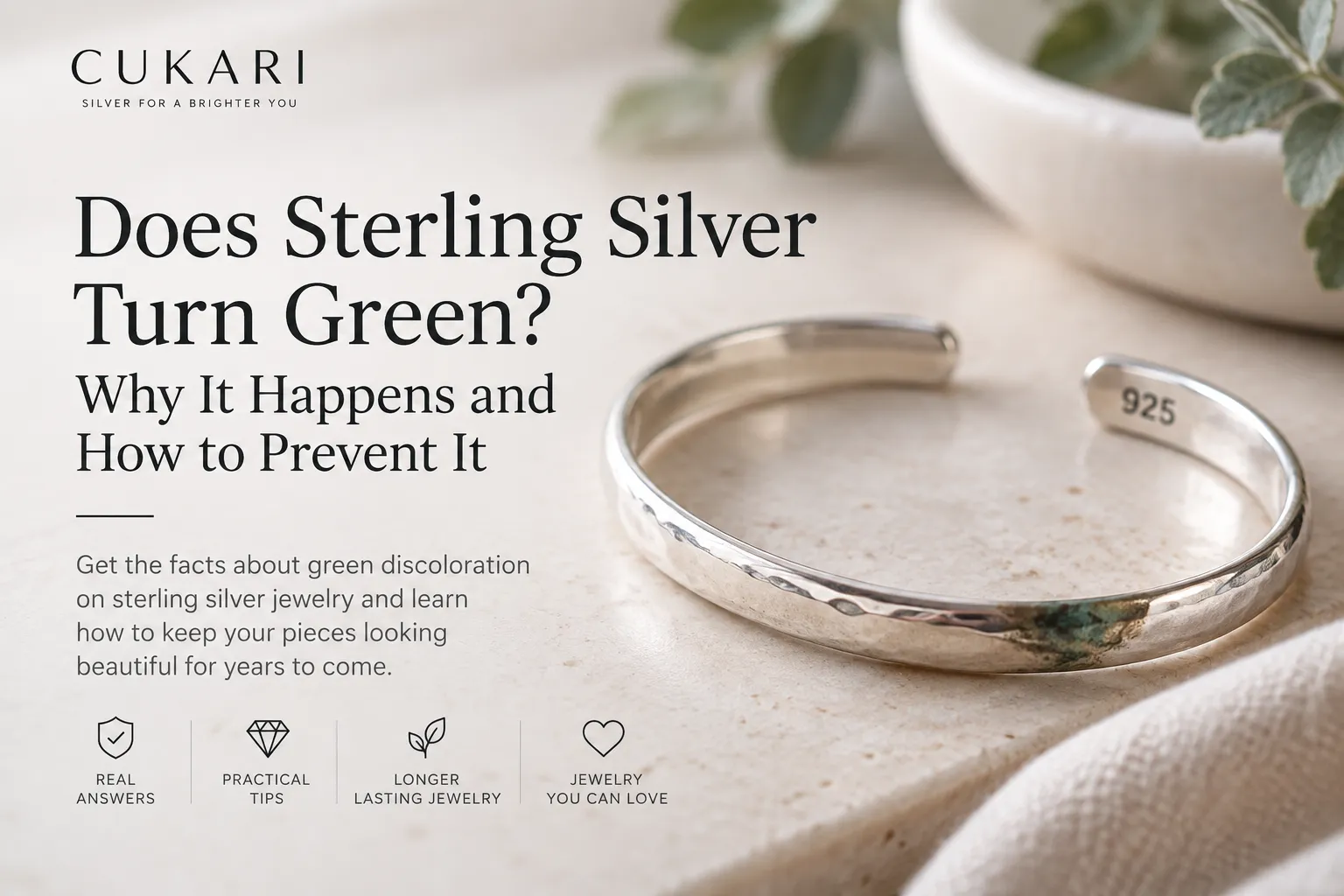
Seeing a green mark around a silver ring or underneath a bracelet can be confusing, especially when the piece was sold as 925 sterling silver. The color can look like rust or corrosion, and it is easy to wonder whether the jewelry is fake or whether the metal has somehow deteriorated.
In most cases, however, the explanation is more ordinary. Sterling silver is an alloy rather than pure silver, and the other metals used in the alloy can react with perspiration, moisture, cosmetics, and substances in the surrounding environment. Copper, which is commonly used in sterling silver, can contribute to greenish discoloration under certain conditions.
There is another possibility that is worth considering when the jewelry is silver-plated. A plated piece has a layer of silver over another metal, so once the coating becomes worn or scratched, the underlying material can become exposed and produce a completely different type of discoloration.
Knowing which situation you are dealing with makes a difference. A little surface discoloration on genuine sterling silver can usually be dealt with through appropriate cleaning and care, whereas worn plating is a problem that cleaning alone cannot solve.
This guide looks at why sterling silver can sometimes be associated with green discoloration, what it means when a ring leaves a green mark on your skin, whether it indicates fake silver, and what you can do to reduce the chances of it happening.
Table of Contents
- Can Sterling Silver Turn Green?
- Why Does Sterling Silver Turn Green?
- Is Green Discoloration the Same as Tarnish?
- Does Green Discoloration Mean the Silver Is Fake?
- Why Silver-Plated Jewelry Can Turn Green
- Can Sterling Silver Leave a Green Mark on Your Skin?
- How to Remove Green Discoloration
- How to Prevent Green Discoloration
- When Should You Stop Wearing the Jewelry?
- Common Misunderstandings About Green Silver Jewelry
- Foire aux questions
- What a Green Mark Can Tell You
Can Sterling Silver Turn Green?
Sterling silver can sometimes be associated with green discoloration, but saying that “silver turns green” is not quite accurate. The color may come from the other metals in the alloy, from substances reacting with the jewelry’s surface, or from a different metal becoming exposed beneath a silver coating.
Sterling silver normally contains 92.5% pure silver and 7.5% other metals. Copper is commonly used in that remaining portion because pure silver is relatively soft and is not always practical for jewelry that needs to withstand regular handling and wear.
If you have ever wondered why a piece marked 925 is not made from 100% silver, our guide to what 925 means on silver jewelry explains how the alloy is made and what the 925 mark actually tells you.
The copper component is important here because copper can participate in chemical reactions that produce green or blue-green compounds under particular conditions. That does not mean the entire piece of sterling silver has changed color. In many cases, the discoloration is limited to the surface or appears as residue on the skin.
The location of the green mark can therefore be just as informative as the color itself.
Why Does Sterling Silver Turn Green?
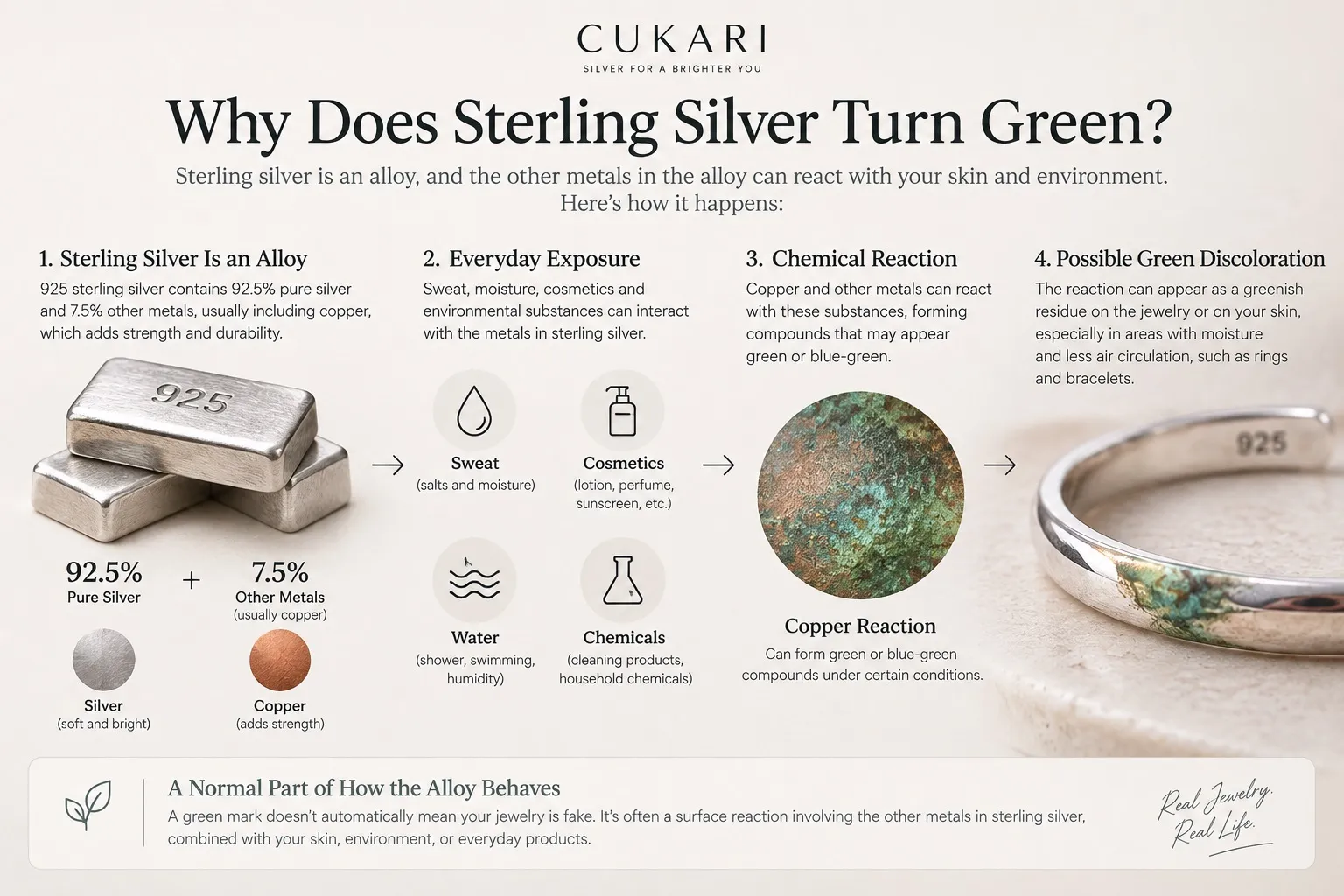
There is no single reaction responsible for every green mark found on silver jewelry. The result depends on the alloy, the wearer’s skin, the environment, and what the jewelry has been exposed to.
A bracelet worn during exercise in hot weather, for example, may spend hours against damp skin. A ring worn every day may collect traces of lotion, soap, perfume, or other products around its inner surface. Over time, those conditions can affect the appearance of the metal.
The Role of Copper
The presence of copper in sterling silver is not a sign of poor quality. It is a normal part of the alloy used to give silver greater strength and make it more practical for jewelry.
Copper is more reactive than silver in a number of everyday environments. When copper-containing material encounters moisture, salts, acids, or other substances, colored compounds can form. Under the right conditions, some of these compounds can appear green.
This is why a green mark should not immediately be taken as proof that a piece of 925 sterling silver is fake. At the same time, copper is not an explanation for every green mark either. If discoloration is concentrated around a deep scratch, a worn edge, or a visibly damaged surface, the construction of the jewelry should also be considered.
Sweat, Moisture, and Cosmetics
The skin creates a particularly active environment for jewelry because perspiration contains moisture, salts, and other substances that can remain against the metal.
People also have different skin chemistry and perspiration levels, which helps explain why one person may wear a particular silver ring without any noticeable discoloration while another sees a green mark after only a short period.
The same applies to the environment. Hot and humid weather, exercise, swimming, bathing, and prolonged exposure to moisture can increase the amount of contact between the jewelry and substances capable of affecting its surface.
Cosmetics can play a part as well. Perfume, lotions, sunscreen, makeup, hairspray, and other personal-care products can leave residues on jewelry. None of these products necessarily causes an immediate reaction, but repeated exposure can contribute to changes in the appearance of silver over time.
Is Green Discoloration the Same as Tarnish?
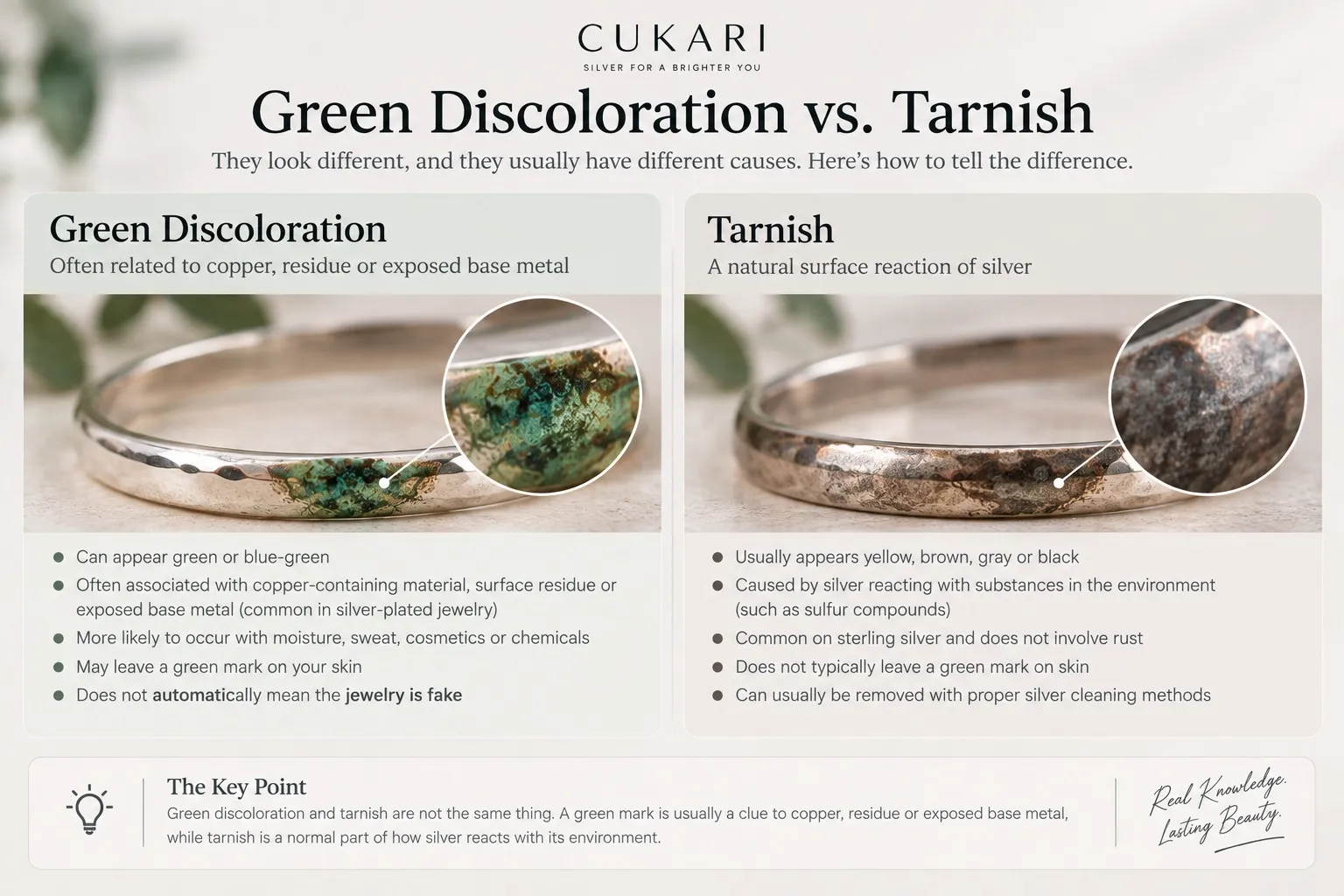
No. Green discoloration and ordinary silver tarnish should not automatically be treated as the same thing.
Tarnish is the gradual surface change that occurs when silver reacts with substances in its environment. Sterling silver commonly becomes yellowish, brown, gray, or black as tarnish develops. This is why a piece of silver jewelry can look darker after being stored for a long period or worn regularly without being cleaned.
Green discoloration can have a different source. It may be associated with copper-containing material or, in the case of plated jewelry, with the underlying metal becoming exposed.
This distinction is useful when deciding how to clean the jewelry. A darkened sterling silver surface may respond well to an appropriate silver-cleaning method. A green area caused by worn plating is different: cleaning cannot replace silver that has already been removed.
If your jewelry has become black or noticeably darker rather than green, our article on why sterling silver jewelry turns black explains the causes of tarnish and the conditions that can make it appear more quickly.
Does Green Discoloration Mean the Silver Is Fake?
Not by itself.
The idea that “real silver never turns green” is one of the more persistent misunderstandings about sterling silver. Genuine 925 sterling silver is an alloy, not pure silver, so other metals are part of its composition. A green mark therefore cannot be used on its own as an authenticity test.
Look at the whole picture instead. Check how the seller describes the material, whether the jewelry carries an appropriate 925 or sterling marking, where the discoloration appears, and whether the surface shows signs of wear.
For example, green discoloration that appears only where a surface has been scratched or worn deserves a different interpretation from a faint green residue appearing underneath a ring after a hot day.
If you are unsure whether a piece is actually sterling silver, our guide on how to tell if a 925 sterling silver bracelet is real covers the markings and other details worth checking before relying on appearance alone.
For higher-value jewelry where the material is uncertain, professional testing is a much more reliable way to establish the metal composition.
Why Silver-Plated Jewelry Can Turn Green
Silver-plated jewelry deserves separate attention because its construction is different from sterling silver.
A silver-plated piece has a layer of silver applied to another material. When the plating is intact, the jewelry can have the same bright silver appearance that people associate with sterling silver. With repeated wear, however, the coating can become thinner in places that experience frequent friction, including edges, clasps, ring interiors, and bracelet surfaces.
Once the underlying material becomes exposed, its color and chemical behavior can affect what you see. Copper-containing base metals, for example, can produce green or blue-green compounds under certain conditions.
This is one of the clearest reasons not to judge silver jewelry solely by its appearance when it is new. A plated piece can look almost identical to sterling silver at first, yet the two can age very differently.
Our guide to sterling silver vs. silver-plated jewelry explains this difference in greater detail, including what happens when each material is scratched and why plating eventually becomes visible when it wears through.
Can Sterling Silver Leave a Green Mark on Your Skin?
Yes, it can happen, particularly underneath rings and bracelets that remain in close contact with the skin.
The green mark is generally a surface reaction or residue rather than the silver itself permanently changing the color of your skin. Perspiration and moisture can remain trapped between the jewelry and the skin, while substances on the skin can interact with the metals in the jewelry.
Rings tend to make the effect especially noticeable because the inside of the band has prolonged contact with the finger. Bracelets can produce a similar mark around the wrist, particularly in hot weather or during exercise.
If the mark disappears after washing your skin and does not come with any discomfort, it may simply be a temporary surface reaction. A recurring mark is worth investigating, however, particularly if the same piece behaves differently from your other silver jewelry.
It is also important not to confuse a green mark with an allergic reaction. A person can experience discoloration without having an allergy, while skin irritation can occur without any green residue at all.
How to Remove Green Discoloration
Before cleaning the jewelry, take a moment to work out what the green material actually is.
If you are dealing with surface residue or ordinary tarnish on genuine sterling silver, begin with a gentle cleaning method. Lukewarm water, a small amount of mild soap, and a soft cloth are appropriate starting points for many uncomplicated pieces. Rinse away any soap residue and dry the jewelry thoroughly rather than leaving moisture on the surface.
For established silver tarnish, a polishing cloth made for sterling silver can be useful. Take care with jewelry that has gemstones, intricate details, a special finish, or deliberately oxidized areas, because aggressive polishing can alter the appearance of those surfaces.
If the piece is silver-plated, extra care is necessary. Abrasive cleaners and vigorous polishing can remove more of the remaining coating. Once the silver layer has worn through and the underlying metal is visible, cleaning cannot restore the missing plating.
In other words, green discoloration is not always a cleaning problem. Sometimes it is evidence that the jewelry needs to be examined more closely.
How to Prevent Green Discoloration
You cannot completely control how silver jewelry reacts with your skin and environment, but a few simple habits can reduce unnecessary exposure.
Keep jewelry dry when possible
Remove rings and bracelets before swimming, bathing, exercising, or doing activities where they are likely to remain wet for an extended period. This is particularly useful in hot weather when perspiration can remain against the jewelry for hours.
Put jewelry on after cosmetics
Perfume, lotion, sunscreen, hairspray, and similar products are better applied before you put on your jewelry. Allow them to dry before the metal comes into contact with your skin.
Wipe jewelry after wearing it
A soft cloth can remove some of the sweat, oils, and moisture that accumulate during the day. This takes only a few seconds and is particularly useful for pieces that sit directly against the skin.
Store silver in a dry place
Silver continues to react with its surroundings even when it is sitting in a jewelry box. Keep pieces in a dry, enclosed environment rather than leaving them exposed to humid air.
Separate storage can also prevent jewelry from rubbing against other pieces, which reduces unnecessary scratching and surface wear.
Clean only when necessary
Regular maintenance does not mean polishing silver as often or as aggressively as possible. Excessive polishing can gradually affect surface details and finishes, while harsh cleaning products can cause problems of their own.
If your main concern is preventing tarnish during storage, our upcoming guide How to Store Sterling Silver Jewelry to Prevent Tarnish will cover storage methods in more detail.
When Should You Stop Wearing the Jewelry?
A small green mark does not automatically mean that a piece of jewelry needs to be discarded. However, there are situations where continuing to wear it without finding out what is happening is not a good idea.
If the surface is peeling, flaking, or visibly losing its silver-colored coating, the jewelry may be plated and the underlying metal may be exposed. Likewise, if a piece repeatedly causes itching, redness, swelling, burning, or another uncomfortable skin reaction, stop wearing it and seek appropriate medical advice if the symptoms persist.
Jewelry with an unclear material description deserves extra caution as well. Terms such as “silver color” or “silver tone” describe appearance rather than establishing that the item is sterling silver.
For an expensive piece with uncertain composition, professional testing is preferable to trying to identify the metal from a photograph or a change in color.
Common Misunderstandings About Green Silver Jewelry
“If silver turns green, it must be fake.”
A green mark is not an authenticity test. Genuine sterling silver contains other metals, commonly copper, and those metals can participate in surface reactions.
“Sterling silver is pure silver.”
Sterling silver is 92.5% pure silver, with the remaining portion made up of other metals. The alloy is used because it offers properties that are more practical for many types of jewelry.
“Green means the silver has rusted.”
Silver does not rust in the same way iron does. Silver is more commonly associated with tarnishing, while green discoloration can have other causes.
“Any dark or green discoloration means the jewelry is damaged.”
Not necessarily. Tarnish, surface residue, and worn plating are different conditions and should not be treated as though they are the same problem.
“Polishing will always remove green discoloration.”
Only if the discoloration is something that can actually be removed from the surface. If the silver coating has worn away, polishing cannot put it back.
Foire aux questions
Does 925 sterling silver turn green?
It can sometimes be associated with green discoloration, particularly because sterling silver contains other metals such as copper. However, green is not the typical appearance of ordinary silver tarnish, and the color alone does not indicate that the silver itself has turned green.
Why does sterling silver leave a green mark on my skin?
Perspiration, moisture, salts, and substances on the skin can interact with the metals in jewelry. Copper-containing materials can produce green compounds under certain conditions, which may leave a temporary mark on the skin.
Does a green mark mean my silver jewelry is fake?
No. A green mark by itself cannot establish whether jewelry is genuine sterling silver. Check the material description, hallmark, seller, construction, and location of the discoloration together.
Can green discoloration be removed from sterling silver?
Sometimes. Surface residue or tarnish may respond to gentle cleaning, but discoloration caused by exposed base metal beneath worn plating cannot be removed simply by polishing.
Does sterling silver rust?
No. Sterling silver does not rust like iron or steel. It can tarnish and darken, while the other metals in the alloy may contribute to different types of surface discoloration.
What a Green Mark Can Tell You
A green mark is best treated as a clue rather than a diagnosis.
If it appears underneath a ring after wearing it in hot weather, the combination of perspiration, moisture, and the jewelry’s alloy may explain it. If it appears along a scratch where a silver-colored surface has visibly worn away, the construction of the piece deserves more attention. And if the jewelry simply develops a darker surface over time, you may be looking at ordinary silver tarnish rather than a problem with the metal itself.
The most useful thing you can do is identify the material before deciding how to clean it. Genuine 925 sterling silver can change in appearance as it is worn, but those changes are generally manageable with sensible care. Silver-plated jewelry requires a different approach because the silver exists as a surface coating and can eventually wear away.
A little discoloration does not necessarily mean that your silver jewelry has reached the end of its life. In many cases, understanding what caused the change is all you need to decide what to do next.