
Can Sterling Silver Jewelry Get Wet?
Yes, sterling silver jewelry can get wet occasionally. A few drops of rain, water from washing your hands, or an accidental splash are not usually something you need to worry about. The bigger concern is repeated exposure to moisture, chlorine, chemicals, soap residue and other substances that can make silver tarnish more quickly.
This distinction is important because “silver should never get wet” is a little too simplistic. Water itself is not automatically going to damage a sterling silver bracelet or ring, but the things mixed with the water, what stays on the jewelry afterward, and how often the exposure happens can all make a difference.
Sterling silver contains 92.5% silver along with other metals that make it harder and more suitable for jewelry. Like other silver alloys, it naturally tarnishes over time, particularly when exposed to air and moisture. GIA also recommends removing jewelry before swimming in chlorinated pools and before using household cleaners because chemicals can discolor or damage precious metals.
So, if your sterling silver bracelet gets wet while you’re washing your hands, there is no reason to panic. Dry it properly and carry on. If you are thinking about wearing the same bracelet in the shower every day or keeping it on while swimming, however, that is a different situation.
What Happens When Sterling Silver Gets Wet?
The simplest answer is that brief contact with clean water usually isn’t a serious problem. Sterling silver does not suddenly become damaged just because it gets wet.
The situation changes when the jewelry is repeatedly exposed to moisture or when the water contains substances that can react with the metal. Chlorine is a good example, which is why swimming pools and hot tubs are worth avoiding. Shower products can also leave residue on the surface, while perspiration, lotions and other everyday products can contribute to tarnishing over time.
Silver is particularly prone to tarnishing because its surface can react with substances in the environment. GIA notes that silver tarnishes when exposed to air and moisture, and recommends careful storage and regular cleaning to maintain its appearance.
This is why there is a difference between getting your bracelet wet once and wearing it in the water every day.
The first is usually nothing to worry about. The second gradually creates more opportunities for tarnish, residue and chemical exposure.
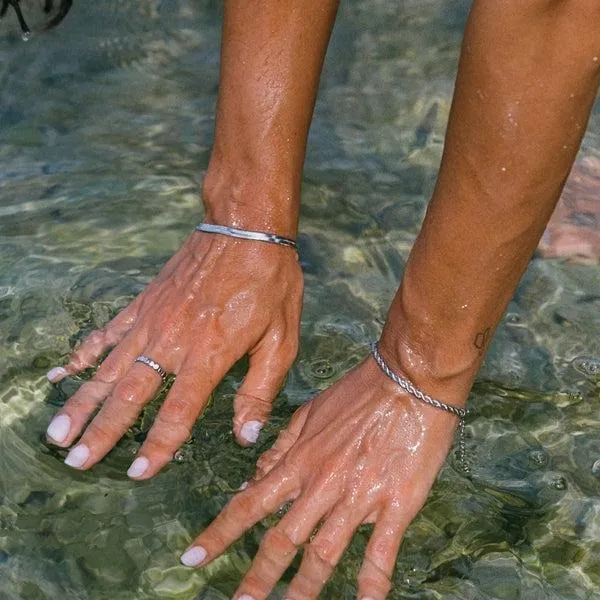
Does Water Make Sterling Silver Tarnish?
Water itself is not the whole story.
Tarnishing happens because silver reacts with substances around it, and moisture can make those reactions easier. Water containing chlorine or other chemicals can be more problematic than ordinary clean water, while moisture that remains on the jewelry for a long time can also contribute to a duller appearance.
This is one reason silver jewelry may look perfectly bright when you first buy it but gradually become darker after months of regular wear. It does not mean that the silver has suddenly become bad or that the jewelry is necessarily fake.
If you notice your silver jewelry becoming darker, the first thing to consider is simply whether it needs cleaning. A silver polishing cloth can often remove light tarnish without the need for water or a chemical cleaner. For more information about silver purity and the differences between fine silver and sterling silver, you can also read our guide to selecting pure silver jewelry.
Can You Shower With Sterling Silver Jewelry?
This is probably the most common version of the question, and my answer is: you can, but it is better not to make it a daily habit.
The issue is not that ordinary shower water will immediately ruin sterling silver. The problem is the combination of water, soap, shampoo, conditioner and body products that can remain on the jewelry after the shower. If those residues are left around a clasp, inside the links of a bracelet or underneath a ring, they can make the jewelry harder to keep clean.
Frequent showering also means frequent exposure to moisture, which can contribute to tarnishing. GIA similarly recommends removing silver jewelry before showering because repeated moisture exposure can accelerate tarnishing, particularly when chlorine or other chemicals are involved.
For something you wear every day, taking the bracelet or ring off before showering is simply easier than cleaning it more often later.
If you forget occasionally, don’t worry about it. Rinse away any obvious soap residue and dry the jewelry thoroughly with a soft cloth afterward.

Can You Swim With Sterling Silver Jewelry?
Swimming is a situation where I would definitely recommend removing sterling silver jewelry.
The main concern is not the water itself but the chemicals used to keep swimming pools clean. Chlorine can affect silver and may cause discoloration or accelerate tarnishing. GIA specifically recommends removing fine jewelry before entering a chlorinated swimming pool.
Hot tubs are another situation where removing your jewelry makes sense. You are exposing the piece to warm water and chemicals for a relatively long period, and there is little benefit to keeping a silver bracelet or ring on while you are in the water.
If you swim regularly, keeping your jewelry in a safe place beside the pool or changing area is a much better habit than trying to protect it after repeated chlorine exposure.
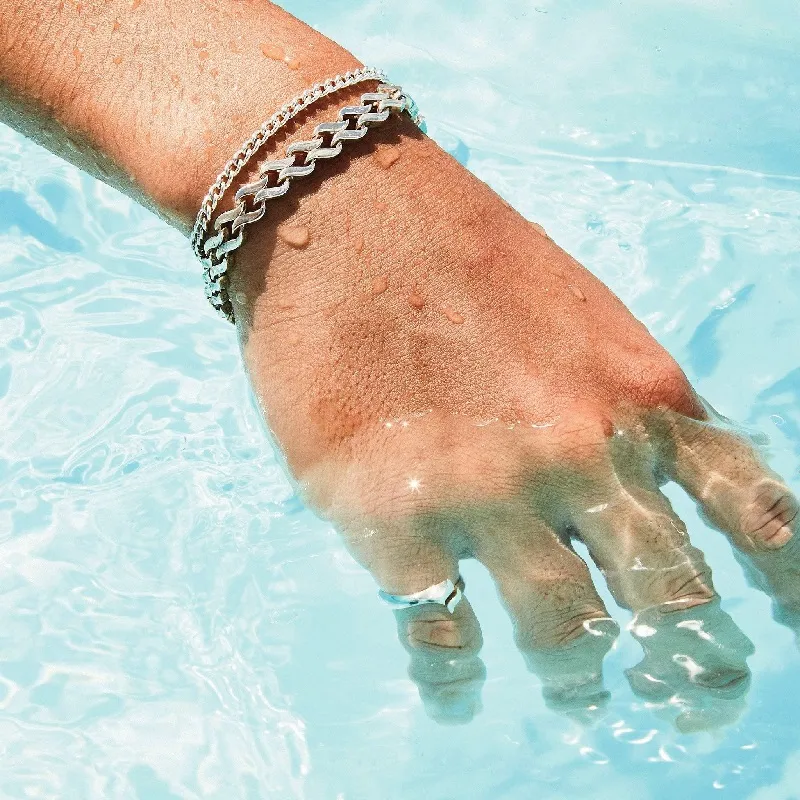
What About Salt Water and the Ocean?
Salt water is a little different from chlorinated pool water, but I still wouldn’t recommend making a habit of swimming in the ocean while wearing sterling silver jewelry.
A brief accidental splash is not something to worry about. The problem is repeated exposure, particularly when salt water, sweat, sunscreen and other products are all present at the same time.
If you do wear your bracelet or necklace into the ocean by accident, rinse it with clean fresh water afterward and dry it properly. Don’t leave salt water sitting on the jewelry until it evaporates.
For expensive pieces, pieces with gemstones, or jewelry with delicate finishes, taking the jewelry off before swimming is still the safest and simplest option.
What If Sterling Silver Gets Wet by Accident?
This is much less serious than many people assume.
If your bracelet gets caught in the rain, your ring gets wet while washing your hands, or you accidentally splash water on a necklace, there is usually no reason to reach for a silver cleaner immediately.
Instead, dry the jewelry with a soft, lint-free cloth and make sure moisture is not trapped around the clasp, underneath a setting or between connected links.
If the jewelry has been exposed to soap, salt water or pool water, rinse it with clean fresh water first and then dry it thoroughly.
The important thing is not to turn every accidental splash into a major cleaning project. Occasional water exposure is part of normal life, and sterling silver jewelry should be able to handle it.
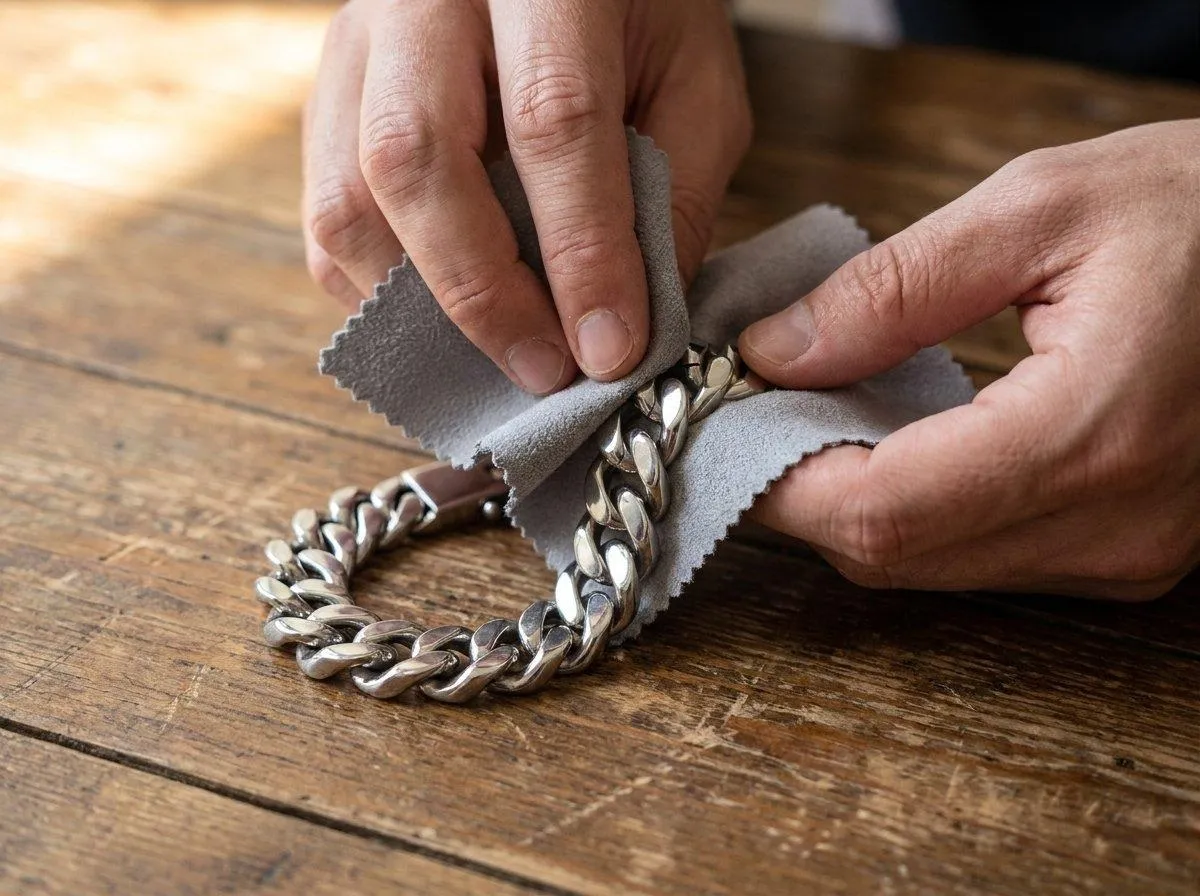
How Should You Dry Sterling Silver Jewelry?
Drying properly is one of the simplest things you can do to reduce unnecessary tarnishing and residue.
After the jewelry gets wet, use a soft, clean cloth to remove the surface moisture. If you are drying a bracelet with multiple connected links, move the links gently while wiping so you can reach areas where water tends to remain.
Pay particular attention to clasps and small recessed areas. These places can stay damp even when the outside of the jewelry feels dry.
You don’t need to use a hair dryer or expose the jewelry to high heat. A soft cloth and a little patience are usually enough.
If the jewelry has gemstones, be more careful because the appropriate cleaning and drying method can depend on the stone and how it has been treated or mounted. GIA notes that some gemstones and treatments can be sensitive to heat, solvents, steam or ultrasonic cleaning.
How Should You Clean Sterling Silver After It Gets Wet?
If the jewelry was only exposed to clean water, drying it may be all that is necessary.
If it has picked up soap, sweat or other residue, mild soap and lukewarm water can be used for a more thorough cleaning. Gently clean the surface with your fingers or a very soft brush, rinse away the soap and dry the jewelry completely.
For light tarnish, a silver polishing cloth is usually the easiest option. You can gently rub the surface until the dullness begins to disappear rather than immediately using a chemical silver cleaner.
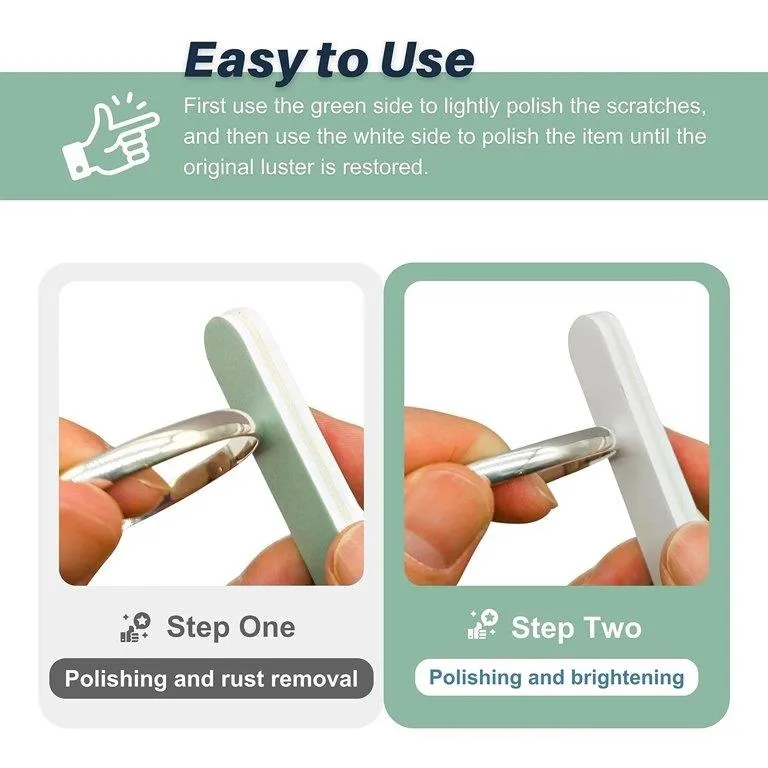
If the jewelry has small detailed areas that are difficult to reach with a cloth, a silver polishing stick can be useful. Use it gently, especially around decorative finishes, gemstones and intentionally oxidized areas.
If you want a more detailed step-by-step example of cleaning a silver bracelet, our guide on how to clean and maintain a sterling silver Cuban link bracelet covers the cleaning process in more detail, including the links, clasp, polishing cloth and polishing stick.
Should You Use a Silver Cleaner After Water Exposure?
Usually, no.
If your jewelry has simply become wet, there is no reason to use a chemical silver cleaner just because water touched it. Rinse away any residue if necessary, dry the jewelry and see whether it actually needs polishing.
A silver-specific cleaner can be useful when genuine tarnish has built up, but it should be appropriate for the particular piece. Some silver jewelry has plating, gemstones or intentionally oxidized details that may require different care. GIA recommends silver-specific cleaning products or polishing cloths for tarnished silver while also pointing out that certain gemstones and finishes require special consideration.
In other words, don’t treat water exposure as a reason to start using stronger cleaning products. Clean the jewelry according to what it actually needs.
What About Sterling Silver Rings With Gemstones?
A plain sterling silver ring and a sterling silver ring with gemstones should not automatically be treated in exactly the same way.
The silver itself may be fine with mild soap and water, but the stone, setting or any treatment applied to the stone can have different requirements. Some gemstones are more sensitive to heat, chemicals or sudden changes in temperature, and certain treatments can be affected by solvents or steam.
For this reason, I would be more conservative with gemstone rings. Remove them before swimming, showering or working with household chemicals, and check the care instructions for the specific stone if you are unsure.
This is also one reason why a professional cleaning can make sense for valuable or complicated pieces. The question isn’t only whether sterling silver can get wet; it is whether every material in the finished piece is suitable for the same treatment.
If you’re interested in sterling silver jewelry designed for couples, you can also browse our sterling silver couple rings. Just remember that rings with gemstones or special finishes may need more careful treatment than plain silver pieces.
What About Sterling Silver Bracelets?
Bracelets tend to encounter water, sweat and everyday products more often than many people realize because they are worn directly on the wrist.
A bracelet can get wet while washing your hands, caught in the rain or exposed to sweat during normal activity, and these situations are generally manageable as long as the jewelry is dried afterward.
The situations I would avoid are prolonged exposure to water, swimming pools, hot tubs and household chemicals. If you wear a bracelet every day, taking it off before showering and swimming is a simple way to reduce the amount of cleaning and polishing it will need.
For everyday styles, you can see more options in our collection of men’s sterling silver bracelets.
How Should You Store Sterling Silver After Cleaning?
Once the jewelry is completely dry, store it somewhere dry and protected from unnecessary exposure to air and moisture.
An anti-tarnish pouch, jewelry box or separate compartment works well. GIA specifically recommends storing sterling silver in an anti-tarnish bag or cloth, and keeping jewelry separated helps reduce scratching as well.
There is no need to store a silver bracelet in an elaborate airtight system. What matters more is keeping it dry and preventing it from being tossed together with other jewelry where pieces can rub against each other.
If the jewelry has just been cleaned, make sure it is completely dry before putting it away. Storing a damp bracelet defeats the purpose of drying it in the first place.
What Should You Avoid When Sterling Silver Gets Wet?
The easiest way to remember silver care is to focus on the situations that create unnecessary exposure rather than trying to avoid every drop of water.
I would avoid wearing sterling silver jewelry while swimming in chlorinated pools, using strong household cleaners, taking long showers with soap and shampoo, or doing activities where the jewelry will remain wet for a long time.
You should also avoid wiping wet silver with rough materials or immediately using abrasive household products to remove what you think is tarnish. Start with a soft cloth and only use a more intensive cleaning method if the jewelry actually needs it.
GIA recommends removing jewelry before using household cleaners and before entering chlorinated pools because chemicals can damage or discolor precious metals and may also affect gemstones.
A Simple Rule for Wearing Sterling Silver Around Water
If you don’t want to remember a long list of rules, I would use a simple approach:
A little water is usually fine. Repeated exposure is best avoided.
Rain, hand washing and an accidental splash are normal parts of everyday life. Just dry the jewelry afterward.
Showering is better without your silver jewelry because soap and moisture can build up over time.
Swimming is different. Remove sterling silver before entering a chlorinated pool or hot tub, and I would also take it off before swimming in the ocean.
If the jewelry gets wet accidentally, rinse away anything that may have been left on the surface and dry it thoroughly rather than worrying about the water itself.
That is a much more practical approach than treating sterling silver as if it can never come into contact with water.
Frequently Asked Questions
Can sterling silver jewelry get wet?
Yes. Occasional exposure to clean water is generally not a serious problem for sterling silver. The bigger concern is repeated exposure to moisture, chlorine, chemicals and residues that can accelerate tarnishing.
Can I wash my hands while wearing sterling silver?
Yes, although drying the jewelry afterward is a good habit. If you wash your hands frequently, removing a ring or bracelet when convenient can reduce repeated exposure to water and soap.
Can I shower with sterling silver?
It is better to remove it before showering. Water itself is not necessarily harmful, but soap, shampoo, conditioner and repeated moisture can contribute to tarnishing and residue buildup.
Can sterling silver go in a swimming pool?
I recommend removing it before swimming. Chlorinated pool water can discolor silver and accelerate tarnishing, and GIA specifically recommends removing jewelry before entering chlorinated pools.
Can I wear sterling silver in the ocean?
An accidental splash is not a major concern, but regular swimming in salt water is best avoided. If the jewelry does get exposed to seawater, rinse it with fresh water and dry it thoroughly afterward.
What should I do if my sterling silver bracelet gets wet?
Dry it with a soft, lint-free cloth and make sure moisture is removed from the clasp and between the links. If it was exposed to soap, chlorine or salt water, rinse it with clean fresh water before drying.
Does water make sterling silver turn black?
Water itself is not usually the direct cause of blackening. Moisture can contribute to the conditions that encourage tarnishing, while substances such as chlorine and other chemicals can accelerate the process.
Can I clean sterling silver with soap and water?
For many plain sterling silver pieces, mild soap and lukewarm water are a practical way to remove dirt and residue. Rinse the jewelry thoroughly and dry it completely afterward.
Can I use a silver polishing cloth after my jewelry gets wet?
Yes. Once the jewelry is completely dry, a silver polishing cloth can be useful for removing light tarnish and restoring some of the surface shine.
Can I use a silver polishing stick on sterling silver?
Yes, particularly around small detailed areas that are difficult to reach with a cloth. Use light pressure and take extra care around gemstones, plating and intentionally oxidized finishes.
Does sterling silver need to be kept completely dry?
No. The realistic goal is not to prevent every drop of water from touching the jewelry. It is to avoid prolonged or unnecessary exposure and to dry the piece properly when it does get wet.
How should I store sterling silver jewelry?
Keep it dry and store it separately from other jewelry when possible. An anti-tarnish pouch, anti-tarnish cloth or jewelry box with separate compartments can help reduce tarnishing and scratching.
Final Thoughts
Sterling silver jewelry does not need to be treated as if it will be damaged every time it comes into contact with water. A few drops from washing your hands, rain or an accidental splash are part of normal everyday wear, and none of these situations should be a reason to panic.
What is worth avoiding is repeated and prolonged exposure, particularly when chlorine, salt water, soap, cosmetics or household chemicals are involved. Taking your jewelry off before swimming or showering is a simple habit that can reduce tarnishing and save you from having to clean it more often.
If your silver jewelry does get wet, dry it properly and check whether it actually needs cleaning. For light tarnish, a silver polishing cloth is often enough; when you need to reach smaller areas, a polishing stick can be useful, while more complicated pieces with gemstones or special finishes may require more careful treatment.
Sterling silver is meant to be worn and enjoyed. You don’t need to avoid water completely to keep it in good condition; you simply need to understand which types of exposure are harmless, which ones are worth avoiding, and how to care for the jewelry afterward.